Showing posts with label Sermons. Show all posts

2018-03-29

1909 Spectator Review of Sermon Collection


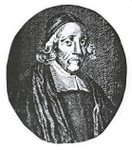
DR. JOHN BROWN has just published a delightful little book of selections from the writings of Thomas Adams, according to Southey "the Shakespeare of Puritan theologians " ("The Sermons of Thomas Adams," Cambridge University Press, ls. 6d. net).
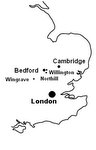
Very little is known of Adams personally; nothing, indeed, save that he was a country parson in the reign of James I. who published sermons, and was the "inward friend" of some of the foremost men of his day, - of William, Earl of Pembroke, and of Sir Thomas Egerton.
Whether or no we agree with Southey (to the mind of the present writer, no man whose didacticism constantly interferes with his sympathy could be called Shakespearean), Thomas Adams's sermons show him to have been a man of genius, and at the same time a man of extraordinarily robust mind; and Dr. Brown has done a service to the public in bringing him once more before their notice.
His disposition was English in a pre-eminent degree. He accepted the Reformed theology, and preached it as the best possible vehicle for the expression of a very real devotion and the only sanction for a common-sense morality.
In secular matters he accepted the status quo as inevitable, if not divinely ordained. He hated rebellion, as he hated oppression. "The common people, like a dead sea," he said, "would be quiet enough" if no man stirred them, "if these blustering winds did not put them in tumult."
The oppressor, however, finds no mercy. Such a one shall "run full butt against the gates of hell and break his neck, and he that at the bars of temporal judgments cried out for nothing but justice, justice, and had it, shall now cry louder for mercy, mercy, and go without it."
He made dogma always the handmaid of morality. He could forgive a dissolute man, but not a hypocrite; a spendthrift, but not a miser. He could see some good in a man of opposite opinions, but none in one of uncertain mind. He regarded abstract speculation as sheer waste of force, the deliberate springing of a leak in the seaworthy ship of conviction.
The great attraction of his sermons lies in their power to express the Englishman's normal way of thinking in the best English of the best period, and to draw satiric portraits of immortal types.
Take first of all the picture of the man who suffers from "the spiritual staggers," - a cruel name, we all feel to-day, for a very sad complaint. All the same, the contempt expressed by Adams is still the sentiment of the majority:-
"Opinion is his sail : he resolves not to resolve. He knows not what he doth hold. He opens his mind to receive motions, as one opens his palm to take a handful of water - he hath very much, if he could hold it. He is sure to die, but not what religion to die in; he demurs like a posed lawyer, as if delay could remove some impediments. He is drunk when he riseth, and reels in a morning fasting. He knows not whether he should say his Pater noster in Latin or English, and so leaves it and his prayers unsaid."
Such a man can find no place of rest in a period of transition, whether he live in the time of Elizabeth or Edward VII. "To-day he goes to the quay to be shipped for Rome, but before the tide come, his tide is turned. Even his published utterance pins him to no conclusion. The child of his own brains within a week he is ready to judge a bastard."
Many a man born in England of English parents has, in Adams's eyes, no right to the name, but is a "semi-atheistical cosmopolite."
"He receives many judgments, retains none, embracing so many faiths that he is little better than an infidel. Thus his breast is full of secret combats, contradictions, affirmations, negatives; and, whiles he refuseth to join with others, he is divided in himself."
Our preacher regards the Bible, in theory, as an absolute authority, but when the New Testament puzzles him be has not much hesitation in setting it aside. A stick, he tells us, is a better protection than the Gospel against a dog who is going to bite.
Persecution revolts Adams. At the same time, be has an instinctive dread of "singularity." It is easy to think too much, he is convinced. Because a man is thoughtful he is not to regard every province of thought as his own:-
"There is a generation of men that are too laborious: curious statesmen in foreign commonwealths, busy bishops in others' dioceses, scalding their lips in their neighbour's pottage. This is an ambitious age of meddlers; there are almost as many minds as men, sects as cities, gospels as gossips : as if they laboured the reducing of the old chaos and first informity of things again."
But if Adams has a poor opinion of the men whose convictions are dissolved by much thinking, he has still less of those whose action is hampered by want of courage:-
"He conceives what is good to be done, but fancies difficulties and dangers, like to knots in a bulrush, or rubs in a smooth way. He would bowl well at the mark of integrity, if he durst venture it. He bath no journey to go, but either there are bugs, or he imagines them. Had he a pardon for his brother (being in danger of death,) and a hare should cross him in the way, he would no further, though his brother hanged for it. He owes God some good-will, but he dares not show it. When a poor plaintiff calls him for a witness, he dares not reveal the truth, lest he offend the great adversary."
Worse than all, "he calls his trembling by the name of conscience." With one terrible sentence our author finishes his condemnation. "His religion is primarily his prince's, subordinately his landlord's." While, however, the preacher reprehends those who fear the great, he has a good deal of belief in race and no quarrel with money. "For us, beloved," he says,  we teach you not to cast away the bag, but covetousness." The rich, he assures his audience, have no monopoly of any fault, not even of pride. "Not seldom a russet coat shrouds as high a heart as a silken garment"
Money made by oppression must, he is certain, bring a curse, and a few doles cannot cover the sin. "Perhaps, you think to make amends for all, for you will increase the Stipend of the vicar." God is not deceived because the oppressor bestows  a little whiting " upon a church, or "a wainscot seat for his own worship," nor even by his founding "a little almshouse" to "give twelve pence a-piece a-week to six poor people."
"Riches be God's blessings, (not only in themselves, so they are always good, but to us,) when they are gotten honestly, disposed justly, lost patiently. As much happily might be said, secondly, for honour, wherein I will briefly consider how and when it is of God."
In this "second" matter Adams is peculiarly frank. He says what a very great number of persons still think, but what no one dare say in the pulpit to-day. "That is then only true honour where dignity and desert, blood and virtue meet together; the greatness whereof is from blood, the goodness from virtue. Among fools dignity is enough without desert; among wise men desert without dignity. If they must be separated, desert is infinitely better. Greatness without virtue is commended by others' tongues, condemned in thy own heart. Virtue, though without promotion, is More comforted in thy own content than disheartened by others' contempt. It is a happy composition when they are united." 
In all this little book there is not a suggestion of unction. Adams bathes the hypocrite who has "plenty of divinity," but no humanity "to offer to the suffering. Faithfulness and kindness and patriotism he pleads with all his might. Perhaps the most eloquent passage in all his eloquent sermons describes how "the habit of sin takes away the sense of sin." He supposes that in the beginning Conscience says to a man, "Master, look to thyself." "But he stops her mouth with a violent hand. Yet she would fain speak to him, like the importunate widow, to do her justice. He cannot well be rid of her, therefore he sets her a day of hearing, and when it is come faileth her. She cries yet louder for audience ; and when all his corrupt and bribed affections cannot charm her silence, he drowns her complaints at a tavern, or laughs her out of countenance at a theatre. But if the pulse beats not, the body is most dangerously sick; if the conscience prick not, there is a dying soul."
To illustrate his kindness, let any one who is interested in his writings read his exhortation to the masters of apprentices. Not only does he warn the cruel in terms that must, one hopes, have made a few of these child-persecutors tremble, but he counsels the well-meaning but injudicious to avoid "harsh language, uncomfortable checks, and the discouragement of continual snibs."
As to his patriotism, there is a sermon preached before a company of soldiers (Dr. Brown does not quote it) in which the case for "a nation in arms" is put as surely it has never been put since. What a fine character! - if one may judge of a man by his sermons - convinced, law-abiding, conservative, kindly, and courageous: a true Englishman!
His religion was of a very sincere and very common type. He rested assured that Christ died to save his soul and God lived to preserve his country, that every man knew right from wrong, and if he did not the Scriptures were at hand to explain the difference. As to that higher teaching, those words which were spoken on the Mount of Olives and seemed likely to turn the world upside down, perhaps the man with the "staggers" knew as much about that as he did. Like most of us, he put it aside reverentially as something redounding to the eternal glory of its Author, not to be brought down to the common level of a necessarily faulty practice.

2007-09-24

Publications 19

Title: God's anger; and, Man's comfort two sermons preached and published by Tho. Adams.

Imprint: London: Printed by Tho. Maxey for Samuel Man at the signe of the Swan in Paul's Church-yard, 1653.
Date: 1653
No. pages: [4], 88 p.
Notes: Annotation on one copy: "Aprill 20".
Copy from: Union Theological Seminary (New York, N. Y.) Library. Also one in British Library. The sermons are prefaced by the poignant page reproduced here (Click for larger image). The texts are Ps 80:4 and Ps 94:19.

Publications 17

Title: The workes of Tho: Adams Being the summe of his sermons, meditations, and other diuine and morall discourses. Collected and published in one intire volume. VVith additions of some new, and emendations of the old. The titles whereof are placed in the beginning of the booke: and a table of the principall points, in the end.
Imprint: London: Printed by Tho. Harper [and Augustine Mathewes] for Iohn Grismand, and are to be sold at his shop in Iuie Lane, at the signe of the Gunne, 1629[-1630]
Date: 1630
No. pages: [12], 514, 529-920, [2], 921-1068, [2], 1069-1240, [12] p.
Notes: "Mathewes pr[inted]. quires Aaa-Ooooo"; "Fiue sermons preached vpon sundrie especial occasions", and "The souldiers honour" have separate dated title pages with Augustine Mathewes's name in the imprint; "Eirenopolis: the citie of peace" has separate dated title page with imprint "London, printed by Augustine Mathevves for Iohn Grismand, 1630"; pagination and register are continuous.; Includes index.; "Eirenopolis" identified as a previouosly published work.
Copy from: Folger Shakespeare Library. Also in Cambridge University Library
These collected works are the basis for the current three volume Tanski Publication, based itself on the 19th Century edition. They are prefaced by dedications to Pembroke, Manchester and the parishioners of St Benet's as well as an epistle to the candid and ingenious reader.
The Works includes Meditations on some part of the creed at the end. The main principles of Christian religion which follows the Westminster Confession is clealry the work of the later ejected minister of the same name.

Publications 16


Title: Three sermons preached 1. In Whitehall, March 29. being the first Tuesday after the departure of King Iames into blessednesse. 2. In Christs Church, at the trienniall visitation of the right Reuerend Father in God, the Lord Bishop of London. 3. In the chappell by Guildhall, at the solemne election of the Right Honourable the Lord Maior of London. By Tho: Adams.
Imprint: London: Printed by Aug. Matthewes, and Iohn Norton, 1625.
Date: 1625
No. pages: [4], 79, [1] p.
Notes: "A sermon preached at the trienniall visitation of the Right Reuerend Father in God, the Lord Bishop of London, in Christ-Church" and "The holy choice" each have separate dated title page, the former on E2v; pagination and register are continuous.; "The holy choice" identified as also elsewhere.
Copy from: Folger Shakespeare Library
The works are preceded by a two page dedication 'To the right honourable and truly noble Lord, William, Earl Pembroke' (William Herbert). The texts are Job 42:6; Acts 15:36 and Acts 1:24. In 1625 the Mayor of London was Allan Cotton and the Bishop of London was George Monteigne.
These three sermons appeared the following year along with two earlier ones in a collection of 'Five sermons'.

Publications 15

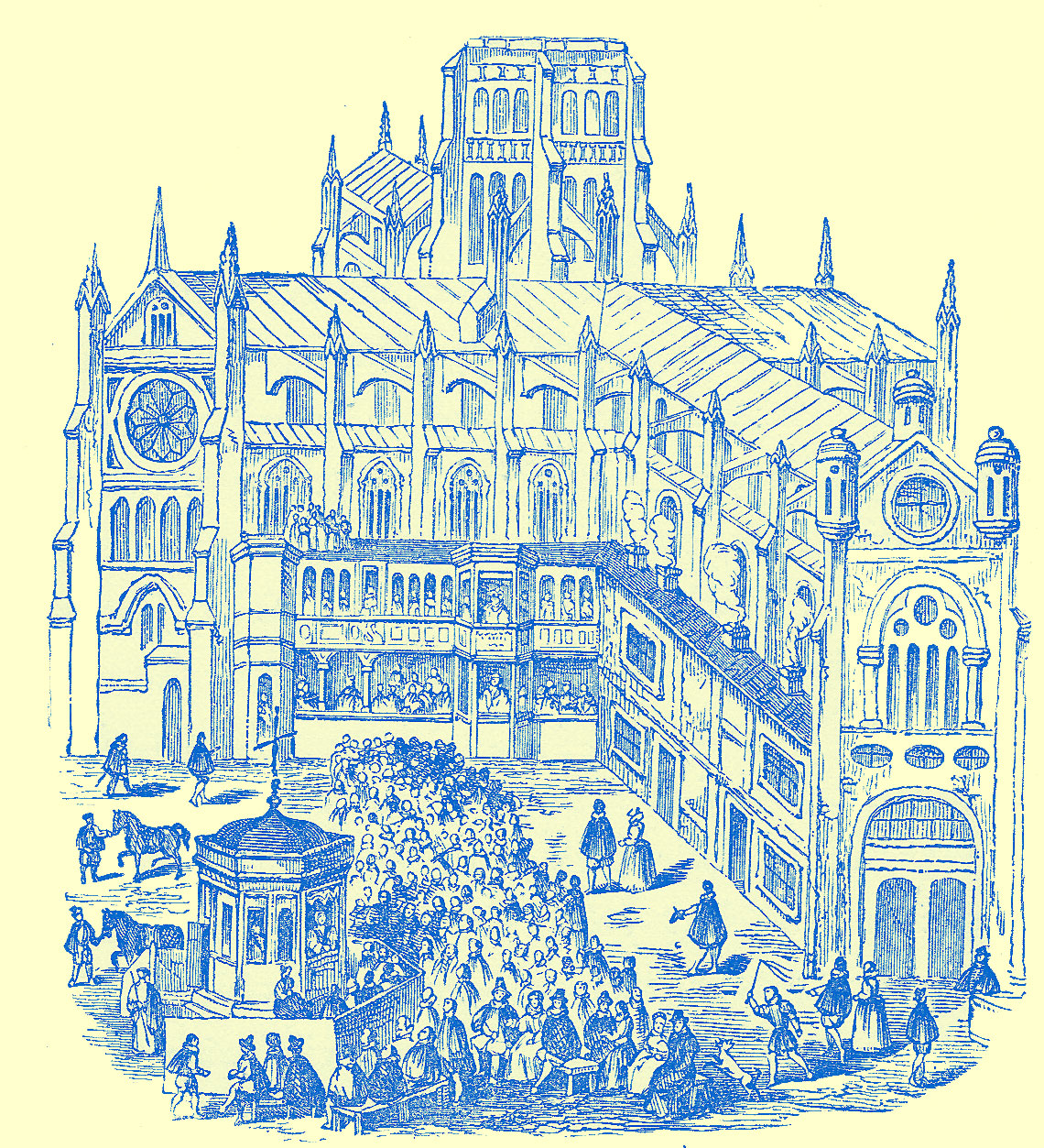
Title: The temple A sermon preached at Pauls Crosse the fifth of August. 1624. By Tho. Adams.

Imprint: London: Printed by A. Mathewes for Iohn Grismand, and are to bee sold at his shop in Pauls Alley at the signe of the Gunne, 1624.
Date: 1624
No. pages: [4], 68 p.
Notes: Also issued as part of: Five sermons preached upon sundry especiall occasions: London, 1626.
Copy from: Henry E. Huntington Library and Art Gallery
The work is preceded by a two page dedication 'To the right honorable Sir Henry Carey, Lord Hunsdon, Viscount Rochford'. Henry Carey lived 1526–1596. He was a courtier and administrator. The text is 2 Cor 6:16.

2007-09-20

Publications 14

Title: The barren tree a sermon preached at Pauls crosse October 26. 1623 by Tho. Adams. Imprint: London: Printed by Aug. Matheuues for Iohn Grismand, and are to be sold at his shop in Pauls Alley, at the signe of the Gunne, 1623. Date: 1623 Pages: [6], 56 p. Notes: Signatures: A4(-A1) B-H4. Reissued as pt. 2 of Five Sermons in 1526.
Copy from: Union Theological Seminary Library (New York, N.Y.) and Cambridge University Library. The work is preceded by a short dedication 'To the reverend and learned Doctor Donne, Dean of St Paul's, together with the Prebend-residentiaires of the same church, my very good patrons' also two pages 'To the reader'. John Donne (1572-1631) is known to as one of the greatest of the metaphysical poets.
The text is Luke 13:7.

2007-09-18

Publications 12

Title: The happines of the Church. Or, a description of those spirituall prerogatiues vvherewith Christ hath endowed her Considered in some contemplations upon part of the 12. chapter to the Hebrewes. Together with certain other meditations and discourses ... Being the summe of diuerse sermons preached in S. Gregories London: by Thomas Adams, preacher there. 2 Cor 12:15 I will gladly, etc.
Imprint: London: Printed by G. P[urslowe] for Iohn Grismand, and are to be sold at his shop neere vnto the little north dore of Saint Pauls, at the signe of the Gun, 1618.
Date: 1618
Pages: [10], 326, 329-443, [3], 35, 35-51, 51-237, 239-375 p.
Notes: Gathering M wrongly imposed. Another state has imprint date 1619 and gathering M correctly imposed (though itself with some errors in paging). "The saints meeting, or progresse to glory" begins with new pagination.
Copy from: Cambridge University Library
The work was preceded by a two page dedication, again 'To the right honorable Sir Henrie Mountague, the Lord Chief Justice of England' and a three page dedication 'To the worthy citizens of Saint Gregory's Parish, sincere lovers of the gospel' and a contents page listing some 26 sermons with texts.

2007-09-15

Publications 11

Title: The souldiers honour Wherein by diuers inferences and gradations it is euinced, that the profession is iust, necessarie, and honourable: to be practised of some men, praised of all men. Together with a short admonition concerning munition, to this honour'd citie. Preached to the worthy companie of gentlemen, that exercise in the artillerie garden: and now on their second request, published to further vse. By Tho. Adams. Ex 15:3 The Lord is a man of war. Imprint: London: Printed by Adam Islip and Edward Blount, and are to be sold in Pauls Church-yard at the signe of the blacke Beare, 1617. Date: 1617 Pages: [12], 33, [1] p. Notes: With an initial blank.
Copy from: Henry E. Huntington Library and Art Gallery

The work is preceded by a seven page introduction dedicated to 'To the well deserving Captain Edward Panton, the captains and truly generous gentlemen, citizens of London, of the society of arms practicing in the artillery garden.' Panton was the first captain of the Honourable Artillery Company given a royal charter in 1537 but going back as far as 1296. Based on the Old Artillery Ground in Spitalfields until 1538-1658, it then moved to a place just south of Bunhill Fields. Still in existence today it is the British Army's oldest regiment.

2007-09-14

Publications 10

Title: The sacrifice of thankefulnesse A sermon preached at Pauls Crosse, the third of December, being the first Aduentuall Sunday, anno 1615. By Tho. Adams. Latin quote from Bernard on Canticles (Song of Solomon). Whereunto are annexed fiue other of his sermons preached in London, and else-where; neuer before printed.
Imprint: London: Printed by Thomas Purfoot, for Clement Knight, and are to be sold at his shop in Pauls Church-yard, at the signe of the Holy Lambe, 1616.
Date: 1616
No. pages: [4], 94, 93-103, [1]; [2], 25, [1]; [2], 45, [1] p.
Notes: "Politicke hunting, or, a discouerie of the cunning Esauites of our times" and "Christ his starre: or, the wise-mens oblation" have caption titles; "Plaine-dealing, or, a precedent of honestie" and "The three diuine sisters" each have separate dated title page and begin new pagination and register; "The taming of the tongue" has separate dated title page but pagination and register are continuous.
Copy from: Cambridge University Library
The work is preceded by a brief dedication 'to the right worshipful, Sir Henry Mountague Knight, the King's majesty's serjeant for the law and recorder of the honourable City of London'. Montagu lived c1563-1642 and was the first Earl of Manchester. The first sermon is on Psalm 118:27. Despite the illustration from early in the book, the sermon on Gen 25:27 comes before that on Mt 2:11.

2007-09-13

Publications 09

Title: Diseases of the soule a discourse diuine, morall, and physicall. By Tho. Adams. Quote from Seneca. Imprint: London: Printed by George Purslowe for Iohn Budge, and are to be sold at the great south-dore of Paules, and at Brittaines Bursse, 1616. Date: 1616 No. pages: [8], 74 p. Copy from: Henry E. Huntington Library and Art Gallery The work is preceded by a two page dedication (appropriately) 'to the truly judicious, and worthily eminent in his profession, Mr William Randolph, Doctor of physic. There is a also a one page epistle 'to the reader'. Some 19 diseases are identified in the work.

2007-09-12

Publications 08

Title: A divine herball together with a forrest of thornes In five sermons By Tho. Adams. Isa 55:11 My word, etc and a quote from Augustine on the blessing of Isaac and Jacob. Imprint: London: Printed by George Purslowe, for Iohn Budge, and are to be solde at his shop, at the great south-dore of Pauls, and at Brittaines Burse, 1616. Date: 1616 No. pages: [8], 157, [3] p. Notes: The first leaf and last leaf are blank; "A divine herball, or, the prayse of fertility. The second sermon"; "The garden or, a contemplation of the herbes. The third sermon"; "The forrest of thornes. The fourth sermon"; "The end of thornes. The fift sermon" each has separately dated title page; pagination and register are continuous. Copy from: Emmanuel College (University of Cambridge) Library The work is preceded by a two page dedication 'to the right honorable, William Earl of Pembroke, Lord Chamberlain of his majesty's household and one of his majesty's most honorable privy council and knight of the most noble order of the garter' plus five brief poetic encomiums by WB, RS, W[illiam] R[andolph] (Dr of Physic), I Stokes and Cecinit The Parny. Pembroke is William Herbert who lived 1580-1630. He founded Pembroke College and was a patron of Shakespeare.

2007-09-11

Publications 07

Title: Mystical bedlam, or the vvorld of mad-men. By Tho: Adams 2 Tim 3:9 Their madness shall be manifest, etc. and a quote from Augustine on the Trinity
Imprint: London: Printed by George Purslowe for Clement Knight, and are to be sold at his shoppe in Paules Church-yard at the signe of the Holy Lambe, 1615.
Date: 1615
No. pages: [6], 82 p.
Notes: Sermons; Running title reads: Mysticall bedlam, the world of mad-men.
Copy from: Cambridge University Library
The two sermons are on Ecclesiastes 9:3 and are preceded by a four page dedication 'To the right honourable Sir Thomas Egerton, Knight, Baron of Ellesmere, Lord High Chancellor of England, one of his majesty's right hon privy council, the true pattern of virtue and patron of good learning.' Egerton lived 1540-1617.

2007-09-10

Publications 06


Title: Englands sicknes, comparatively conferred with Israels Diuided into two sermons, by Tho: Adams. Imprint: London: Imprinted by E: G[riffin]: for Iohn Budge, and Ralph Mab, 1615. Date: 1615 No. pages: [4], 101, [1] p. Notes: Quires F and I exist in two different settings, identified by the position of the signature-mark on the first leaf of the gathering. Quire F: signature-mark (1) under "God" or (2) under "please". Quire I: signature-mark (1) under the "d" or (2) under the "m"s of "commendeth". Copy from: Cambridge University Library
The text is Jer 8:22. The work is divided into two lectures preceded by a two page dedication "to the right worshipfull Sir Iohn Cleypoole Knight". This appears to be John Claypole of Northborough, Northamptonshire, married to Mary Angell and the father (1625) of Lord John Claypole who married Cromwell's daughter Elizabeth.

2007-09-07

Publications 04

Title: The deuills banket described in foure sermons [brace], 1. The banket propounded, begunne, 2. The second seruice, 3. The breaking vp of the feast, 4. The shot or reckoning, [and] The sinners passing-bell, together with Phisicke from heauen / published by Thomas Adams
Imprint: London: Printed by Thomas Snodham for Ralph Mab, and are to be sold in Paules Churchyard, at the signe of the Grayhound, 1614.
Amos 6:7 and 8:10 Therefore, etc
There is also a Latin quotation fom Ambrose on penitence.
Date: 1614
No. pages: [8], 348 p.
Notes: Each sermon, except the first, has special t.p.; Part V has imprint: London: Printed by Thomas Snodham of Iohn Budge, 1614.; Marginal notes.; Includes six sermons published elsewhere; Signatures: A-2V4 2X3.; Signature Bb3 mislabeled Bb5.; Numerous errors in paging.
Copy from: Harvard University Library
The sermons are preceded by a three page dedication 'To the verie worthie and vertuous gentleman Sir George Fitz-Jeoffrey Knight, one of Majesties Justices of the Peace and Quo vam in the Countie of Bedford' and a three page epistle to the reader headed 'Ad vel in Lectorem'.


That same year another edition appeared
Title: The Diuells banket Described in sixe sermons. ... Published by Thomas Adams ...
Imprint: London: Printed by Thomas Snodham for Iohn Budge [or Ralph Mab], and are to be sold in Paules Churchyard, at the signe of the Grayhound, 1614.
Date: 1614
No. pages: [8], 341, [3] p.
Notes: The last leaf is blank.; Sermons [2] "The second seruice of the Deuils banket", [3] "The breaking vp of the Deuils banket. Or the conclusion", [4] "The shot: or the wofull price vvhich the wicked pay for the feast of vanitie", [5] "The sinners passing-bell. Or a complaint from heauen for mans sinnes", and [6] "The sinners passing-bell. Or phisicke from heauen" have separately dated title pages; pagination and register are continuous.; Sermons 5 and 6 may have been issued together separately.; The general title page and those of all the sermons except 5 may have either John Budge or Ralph Mab in the imprint; sermon 5 has only been noted with Budge's name.; Sermon 5 identified as existing elsewhere.
Copy from: Henry E. Huntington Library and Art Gallery (also at Sion College).

2007-09-06

Publications 03

Title: The white deuil, or The hypocrite vncased in a sermon preached at Pauls Crosse, March 7. 1612. By Thomas Adams minister of the gospell at Willington, in Bedfordshire.

John 6:70 Have I not chosen you twelve, etc.
Imprint: London: Printed by Melchisedech Bradvvood for Ralph Mab, and are to be sold in Pauls Church-yard, at the sig ne [sic] of the Angel, 1613.
Also a version printed by Thomas Snodham.
Date: 1613
No. pages: [8], 61, [1] p.
Notes: Running title reads: The white deuill. On second edition some print faded; several pages stained.
Copy from: Emmanuel College (University of Cambridge) Library. Also one at Union Theological Seminary (New York, NY) Library.
The sermon is preceded by a two page dedication to Sir Thomas Cheeke (an MP?) and a three and a half page epistle to the reader. The sermon is on John 12:6.
Easily Adams's most popular work it was presumably reprinted more than once and then an expanded edition appeared in 1615 -
Title: The vvhite deuill or The hypocrite vncased to this fourth impression are newly added, 1 The two sonnes or The dissolute conferred vvith the hyprocrite. 2 The leauen, or A medicine for them both. By Tho. Adams.
Imprint: London : Printed by Thomas Dawson, for VVilliam Arondell, and are to be sold in Pauls Church-yard, at the signe of the Angell, 1615.
Date: 1615
No. pages: [10], 121, [1] p.
Notes: "The tvvo sonnes or the dissolute conferred vvith the hypocrite" has separate dated title page, and "The leauen or a direction to heauen" has a divisional title, but pagination and register are continuous.
Copy from: Henry E. Huntington Library and Art Gallery
This expanded edition also appeared in 1621 [Imprint: London: Printed [by Thomas Snodham] for Richard Higginbotham, and are to be sold in Pauls Church-yard, at the signe of the Angell, 1621. No. pages: [10], 62+ p. Notes: The first leaf is blank.; "The leaven, or a medicine for them both" was published in the fourth impression as "The leaven or a direction to heaven". (Lacking all after p. 62). Copy from: Sion College Library]

2007-09-05

Publications 02

Title: Heauen and earth reconcil'd A sermon preached at Saint Paules church in Bedford, October. 3. 1612. At the visitation of the right Wor. M. Eland, Archdeacon of Bedford. By Tho. Adams, Minister of the Gospell at Willington. 1 Cor 5:19 For God was in Christ, etc.
Imprint: London: Printed by W. W[hite] for Clement Knight, and are to be sold at his shop in Paules Church-yard at the signe of the holy Lambe, 1613.
Date: 1613
No. pages: [2], 23 leaves
Copy from: Cambridge University Library
On the first two pages there is a dedication to the Right honorable Lord Henry, Earl of Kent, Lord of Hasting, Weisford and Ruthyn. This is Henry Grey (1583-1639). The sermon is on Daniel 12:3.
George Eland had become Archdeacon of Bedford in 1600. He was also Chancellor of Lincoln (from 1606). He died in 1631.

2007-09-04

Publications 01

The first title Adams' ever had published was as follows

Title: The gallants burden A sermon preached at Paules Crosse, the twentie nine of March, being the fift Sunday in Lent. 1612 By Tho. Adams, preacher of Gods Word at Willington in Bedfordshire.
Imprint: London : Printed by W. W[hite] for Clement Knight, and are to be sold at his shoppe in Pauls church-yard at the signe of the Holy Lambe, 1612.
Date: 1612
No. pages: [2], 34 leaves
Copy from: Cambridge University Library
The sermon is preceded by a two page dedication "to the honorable Sir William Gostwicke, baronet, and his worthy Lady, the Lady Jane Gostwicke". The Gostwicks were Lord and Lady of the Manor in Willington where Adams pastored. Gostwick lived 1565-1615. The sermon is on Isaiah 21:11, 12.
Further editions appeared in 1614 [Imprint: London: Printed by T[homas] S[nodham] for Clement Knight, and are to be sold at his shop in Paules church-yard at the signe of the Holy Lambe, 1614. No. pages: [4], 67, [1] p. Copy from: Henry E. Huntington Library and Art Gallery] and 1616 [same imprint as the original, same pages as 1614. Copy from: Union Theological Seminary (New York, N. Y.) Library]

2007-08-20

A crucifix

Adams' sermon on Christ's passion A crucifix is available here at Chapel Library.

2007-01-27

More sermons

Another collection of 12 sermons can be found here on Google Books. This edition is from 1847. The sermons are as follows

1. The Three Divine Sisters: Faith, hope, and Charity
2. The Leaven; or, A Direction to Heaven.
3. A Crucifix; or, A Sermon upon the Passion,
4. Semper Idem; or The Immutability of Jesus Christ
5. Heaven's Gate; or, The Passage to Paradise
6. Majesty in Misery; or the Power of Christ even dying
7. The Fool and his Sport
8. The Christian's Walk; or the King;s Highway of Charity
9. Love's Copy; or, The Best Precedent of Charity
10. God's Bounty; or The Blessings of Both his Hands
11. Politic hunting

12. The Taming of the Tongue

Semper Idem

Adams' sermon Semper Idem; or, the Immutable Mercy of Jesus Christ can be found here