Showing posts with label Mitchell. Show all posts

2008-01-25

Mitchell on Adams 05

This is the last section from W Fraser Mitchell.
A careful consideration of such of his sermons as are dated unfortunately demolishes Professor Croll’s contention that Adams began in imitation of Latimer and the medieval preachers, as did Jewel and Lever before him, but that he gradually shook himself free from the fascination of their gay ornaments and rhetorical schemata. Taken, so far as is possible, in chronological order, Adams’ work reveals no sign of such development, but all through his life he continued to employ the favourite schemata of preachers in all ages from the time of Cyprian onwards - particularly paramoion - with greater or less elaborateness in proportion as he was striving after rhetorical effects. It is true that Adams seems to us to achieve his happiest effects when he leaves the schemata alone and takes flight on the gauzy wings which were afterwards to bear Jeremy Taylor into the blue of heaven in pursuit of his lark (see note), or reminds us, reminiscently it is true, but with something of Fuller’s wit, of our natural swarthiness and the repeated tanning of our sins. (Englands Sicknesse, ed cit, p 306). But this is only to acknowledge that we prefer Taylor’s poetical fancy or Fuller’s wit to Lyly’s parallelism, and consequently are more ready to appreciate Adams where he most resembles the later writers. The men of his own day no doubt thought otherwise, and were ready to applaud his balanced clauses, where adjective corresponded to adjective, noun to noun, and a similarity of ending or resemblance in sound was sedulously cultivated. Professor Croll’s assertion that such figures — the last faint echo of classical rhetorical training enjoyed a florescence in England among the celebrated of the older preachers at the opening of the seventeenth century is amply justified; but that florescence enjoyed a sudden metamorphosis under the influence of Bacon and Donne in the actual sermons of Adams seems hardly tenable. Adams is rather to be regarded as a fellow-worker with these greater writers, breaking down the tyranny of the schematic patterns in the interests of a less pointed, more sonorous style. As early as 1614 we find him able to dispense with the wearisome second half of his antitheses, and close like Bacon with a statement, giving a quiet ending without the customary reverberation. Space alone precludes quotation of some of the longer and more matured passages which obviously what attracted Southey’s admiration; yet the fact remains that in sermons of a late date the older, cruder use of the schemata recurs, which is to be explained neither as a reversion on the part of Adams, nor, as with Williams' ‘Six Sermons,’ preached in the 1640s, in terms of Dryden’s gibe about stylistic abuses finding benefit of clergy, but simply points to the extraordinary experimentation that was then taking place among English writers — an experimentation in which the pulpit, as represented by Adams and men of his type, took a prominent part. The preacher, like the poet, is both moulded by his age and exerts an influence upon it, and the sermons of Adams present us with the case of a man catering at times for popular vogue, but who in his published work was undoubtedly preparing the way among his readers for other and less jejune stylistic effects.
Note
‘The Fatall Banket,’ ed cit, p 220: the passage opening: "As inafaire Summers morning when the Larke bath called up the Sunne, and the Sunne the Husbandman: when the earth bath opened her Shop of perfumes, and a pleasant wind fannes coolenesse through the ayre; when every creature is reioyced at the heart; On a suddaine, &c" is one of the finest in the whole range of Adams’ writings.

2008-01-16

Mitchell on Adams 04

More from W F Mitchell
... In the same year as he published The Sovles Sicknesse, five other sermons appeared from his hand under the general title of A Divine Herball. In the third of these, ‘The Contemplation of the Herbes,’ he enumerates various herbs and compares them to corresponding virtues, very much as he had previously compared diseases and vices. But, like so many who have tried to portray both virtues and vices, Adams was unable to give to his virtues the life and attractiveness of his vices. Besides, he may have wished to persuade the devout, who, it seems, looked askance at his free use of wit and fancy, that he had not really found pleasure in the lively depicting of sinners apart from his desire to warn men from sin, and have thought that a restrained and modified use of the character manner of writing would best effect the transition back from the purely entertaining to the definitely edifying. The Contemplation of the Herbes may therefore be regarded as Adams’ ‘Characters of Vertues.’ His effort, however, is dull after the parade of the Bedlamites or the ‘witty’ diagnoses of the spiritually diseased, and would not in itself have marked out Adams for mention from a number of earlier divines who essayed this kind of writing.
Apart from his characters Adams’ prose is interesting for its variety - the blending of old and new, the conceited and the rhetorical, with the freer, grander, more poetical, and, ultimately, more beautifully handled style of Bacon and Donne and Taylor. While himself playing no definite part in discarding the old and adopting the newer manner, Adams was keenly alive to the effect to be produced by reverting from time to time to the archaic manner or experimenting with the new. His sermons, in consequence, are a kind of literary workshop of the early seventeenth century, where we may see English prose in the making. Or, perhaps, a slipway might afford the better metaphor. Now and then we see the old rhetorical supports removed and the newly-built vessel ready to take the water; but just then Adams remembers that he is not there to follow the completion and subsequent adventures of his ship, but to turn out as many others as possible; and once again we are aware of the old beams - the age-old rhetorical devices - being called upon to perform their old service and support a fresh message. It was for others to choose the manner English prose should adopt; but it remains to Adams’ credit, as it gives to his work an additional importance, that he should have seen its possibilities, and amid the demands of a spiritual cure in a distracted time have experimented so interestingly with the materials he found to his hand.
All the main rhetorical forms which went to the making of the Euphuistic style, and which Professor Croll has shown in his study of that vogue to represent an attenuated but persistent survival of the Gorgianic or Isocratean figures, which descended to the Elizabethans by way of mediaevaI ecclesiastical prose, are profusely illustrated in Adams’ work. In it it is possible to study the antitheses familiar to students of Lyly in their traditional setting of the sermon, and to note the subtle transition from the old schematic prose to the more direct style of the Jacobeans. Many passages in Adams bristle with such rhetorical comparisons as the following
“... when the Sunne is hottest, the springs are coldest: and the more feruent the loue of God is to vs, the more cold is our charitie to him, and to others for him” [see note 1 below]
or;
“It is written of the Thracian flint, that it burnes with water and is quenched with oyle: fit Embleme of those wicked soules that are the worse for God’s endeauour to better them. But such contrary effects hath the Gospel in contrary natures. As by the heat of the Sun waxe is softned, and yet clay is hardned : so by the preaching of the word the hearts of such as shall be saued are mollified; but the hearts of the lost are further obdurate.” [see note 2 below]
Much in the same way the openings of some of Adams’ sermons consist of a set of Lylyan antitheses used as a kind of definition, in the manner of Bacon in his Essays, each of which sets out with a kind of general statement developed in a series of brief rhetorical parallels. Thus the commencement of Eirenopolis: The Citie of Peace reads
“Peace is the Daughter of Righteousnesse; and the mother of knowledge, the nurse of Arts, and the improuement of all blessings. It is delectable to all that taste it, profitable to them that practise it; to them that look vpon it, amiable; to them that enioy it, a benefit inualuable. The building of Christianity knowes no other materials.” ...
Notes
1. Adams’ sermons are exceptionally rich in examples of paromoion; the following are some of the many examples to be met with in his works: ed. cit., p. 473 "His brain is full of humour, his heart of tumour, his tongue of romour [= rumour]"; ibid., p. 925: “Schola crucis, Schola lucis : there is no such Schoole instructing as the cross inflicting”; ibid., p. 921: “And indeed, if wee consider what Master we have seined, and what wages deserued, we haue just cause to abhorre our selves”; ibid., p. 1002 : “ There is the Diligite of the Heart, Loue your enemies. The Benedicite of the Tongue, Blesse them that curse you. The Benefacite of the Hand, Doe good to them that hate you. Loue your enemies, there is Affectus cordis ; Doe them good, there is Effectus operis; . . .“ The readiness with which this trait follows similar expressions in Latin points back to its origin, or rather the immediate spring of its influence in that language.
2. ‘The Fatall Banket,’ ed. cit., p. 220: the passage opening: “As in a faire Summers morning when the Larke hath called up the Sunne, and the Sunne the Husbandman: when the earth bath opened her Shop of perfumes, and a pleasant wind fannes coolenesse through the ayre; when every creature is reioyced at the heart; On a suddaine, &c’ is one of the finest in the whole range of Adams’ writings.

2008-01-04

Mitchell on Adams 03

See pp 218ff of W Fraser Mitchell on English Pulpit Oratory
The Epicure
“I would faine speake (not only of him, but) with him. Can you tend it, Belly-god? The first question of my Catechism shall be, What is your name? Epicure. Epicure? What’s that? speake not so philosophically; but tell vs in plaine dealing what are you? A louer of pleasure, more than of God. One that makes much of my selfe; borne to hue, and lining to take mine ease. ... I beleeue that delicacies, junkets, quotidian feasts, suckets and marmulads are very delectable. I beleeue that sweet wine and strong drinkes; the best blood of the grape, or sweate of the come is fittest for the belly. I beleeue that midnight reuels, perfumed chambers, soft beds, close curtaines, and a Dalilah in mine armes, are very comfortable. I beleeue that glistring silkes, and sparkling Iewels, a purse full of golden charmes, a house neatly decked, Gardens, Orchards, Fish ponds, Parkes, Warrens, and whatsouer may yeeld pleasurable stuffing to the corpse, is a very heauen upon earth. I beleeue that to sleepe till dinner, and play till supper, and quaffe till midnight, and to daily till morning; except there be some intermission to toss some paynted papers, or to whine about squared bones ... this is the most absolute and perfect end of man’s life... (The 'Workes’ 1630, pp 498-9).

The Epicure dismissed (after a decidedly fine passage on the insecurity of all human tenures), the Proud is led in. First the proud man and then the proud woman is passed in review, and once more the passage is brought to an end by a reflection on human folly in the face of death. Here,as is also the case with Smith, we find the Puritan preacher joining hands with the Elizabethan pamphleteer in a highly-coloured portrayal of sin consumed by a loathsome and vividly realised mortality. Adams’ words might come straight from ‘Christs Tears Ouer Ierusalem’ and Nashe might be the writer:

“There is mortality in the flesh, thou so deckest: and that skin which is so bepainted with artificial complexion, shall lose the beauty and it selfe. Detrahetur novissimum velamentum cutis. You that sayle betwixt heauen and earth in your foure-sail'd vessels, as if the ground were not good enough to be pavements to the soles of your feet: know that the earth shall shall one day set her foote on your neckes, and the slime of it shall defile your sulphured beauties: dust shall fill up the wrinckled furrowes, which age makes, and paint supplies. Your bodies were not made of the substance whereof the Angels; nor of the nature of the starres, nor of the matter, wherof the fire, ayre, water, and inferiour creatures. Remember your Tribe, and your fathers poore house, and the pit whereout you were hewen: Hannibal is at the gates, death stands at your dores: be not proud, be not madde: you must die.” (The 'Workes’ 1630, p 500).

Sufficient has been quoted to show that Adams’ characters shared the tendency of all English characters to be “wits descant on any plaine song,” which is precisely Overbury’s definition of this kind of writing. In 1616 Adams again produced a gallery of characters, this time following a traditional framework for such sermons, and choosing a succession of diseases paralleled by moral distempers. Each form of illness is dealt with under ‘Cause,’ ‘Signes and Symptoms,’ and ‘Curation,’ and as many ‘witty’ parallels as possible are drawn between the physical and the spiritual complaint. This series, entitled The Soules Sicknesse: A Discovrse Divine, Morall, and Physicall, closely resembled in plan ‘A Christian Heavenly Treatise, containing Physic for the Soul,’ published just then by John Abernethy, minister at Jedburgh (and afterwards Bishop of Caithness), that Adams was at pains in his Epistle to the Reader to protest that his production had been “committed to the stationers hands, passed and allowed by authority; yea ... and, perhaps, an impression sold, before that of Mr John Abernethy’s came out.” This time nineteen characters appeared - some of them the same types treated afresh - and a considerable advance is perceptible in the power of ‘witty’ delineation. Of the vain-glorious man, whose condition is compared to ‘windinesse in the stomacke’ (disease 16), we are told
“... When he rides his masters great horse out of ken, he vaunts of him as his owne, and brags how much he cost him. He feeds vpon others curtesie, others meat: and (whether more?) either fats him. At his Inne he cals for chickens at spring, and such things as cannot be had whereat angry, he sups according to his purse with a red Herring. Farre enough from knowledge, he talkes of his castle, (which is either in the ayre or inchanted). .... In his hail, you shall see an old rusty sword hung vp, which he sweares killed Glendower in the hands of his Grandsire. He fathers vpon himselfe some villanies because they are in fashion; and so vilifies his credit to aduance it. ... He is indeed admirations creature, and a circumstantiall Mountebank.” (The 'Workes’ 1630, pp 470, 471).

The other characters are drawn with equal liveliness, and it is evident that the preacher, whatever the ostensible object of his portraits, has been carried away by his own device and become the character-writer. Perhaps Adams became conscious of this, or, what is more likely, he had exhausted the range of characters which he felt equal to presenting. ...

2007-09-26

Mitchell on Adams 02

This is the next section from W Fraser Mitchell
In 1615 Adams preached, on Trinity Sunday, at St Giles Without Cripplegate, and later published his sermon with the title The Spirituall Navigator Bound for the Holy Land. Milton’s father was at this period resident in St. Giles parish, and it is therefore possible that the future poet, then seven years of age, may have been present and heard Adams preach. The sermon was from a text from the Apocalypse - Before the throne was a sea of glass like unto crystal (Rev. 4:6). After treating of the various allegorical significances of “the glassy and crystal-like sea,” as expounded by Ambrose, Augustine, Brightman (a contemporary Puritan d 1607), Emmanuel Sa (celebrated Jesuit commentator), Bullinger, and others - the authorities quoted provide a good specimen of the catholicity of Adams’ reading ‘- the preacher proceeded, as Donne in his sermon at The Hague’ four years later, to enumerate the various ways in which the world resembled a sea. Some of the parallels are extremely well drawn, and the whole sermon is not unworthy of comparison with that of Donne, who must have been familiar with it, and may have avoided borrowing or repetition of ideas by a careful reading of the earlier discourse. After the parallels had been exhausted, Adams concluded with a description of the varied activities and innumerable follies of mankind which God, seated on His throne, beholds reflected in the mirror of the glassy sea, and so introduced his first company of characters.
“There runne honour and pride aeqvis ceruicibus. There walkes fraud cheeke by iowle with a Trades-man. There stalkes pride, with the face of a Souldier, but habit of a Courtier; striuing to adde to her owne stature fetherd on the crowne, cork’d at the heeles, light all ouer: stretching her legges, and spreading her wings like the Ostrich, with ostentation of great flight: but nil penna, sed usus; not an inch higher or better. There slugs Idlenesse: both hands are in the bosome, while one foote should be in the stirrop.
“Here halts Opinion lame not with the shortnesse, but length of his legges: one foote too long, that marres the verse. There runnes Policie, and moues more with an Engine, then many men can doe with their hands:
“There slides by the meagre ghost of malice. ... There flye a crew of Oathes, like a flight of dismall Ravens, croking the Plague to the House, where the Swearer is …”
The Heavenly camera obscura continues, presenting still fresh types of human folly, until the Divine Spectator is obviously forgotten, and the original intention of showing men their deformities and so disgusting them with their sins. Each fresh sinner is introduced out of pure love for witty description. The moral descriptio has become the character.
The publication, in the year previous (1614) to The Spirituall Navigator, of the collection of characters which came from the pen of Overbury and his friends had given fresh impetus to what was obviously a current fashion, and probably Adams’ characters as depicted in his sermon were received with applause, or he may have discovered his gift for this kind of description. Certain it is, that before the close of the year he issued a complete set of characters in the manner of Hall and Overbury, under the title of Mysticall Bedlam: Or The World of Mad-Men, dedicated to no less a person than Sir Thomas Egerton, Baron Ellesmere. After a kind of preliminary discourse based upon a piece of restrained wit drawn from grammar and logic, and reminiscent of Donne, with the remark, “Stultorum plena sunt omnia,” Adams proceeds to introduce his madmen or characters, presenting one and another before us that they may make us sport, just as the keepers of Bedlam in his day were accustomed to lead in their charges to provide amusement for visitors. The Epicure is chosen to “leade the ring, as the foote man of this mad Morisco,” and accordingly, in the printed version is introduced, as is each character in turn, under a separate heading.

2007-09-05

W F Mitchell 01


This extract is from W Fraser Mitchell's English Pulpit Oratory From Andrewes to Tillotson published by SPCK in 1932. See pp 214-216


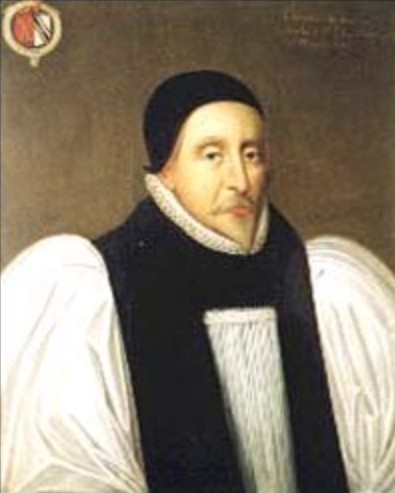
Adams’ sermons are particularly rich in topical allusion and, … he drew upon contemporary deposit of strange and curious learning secured at one and the same time an edifying moral rhetorical effect. One feature of his work, however, calls for special remark - his great familiarity with the Classics and his almost instinctive habit of quoting from them. Not after his first college-addresses as a young don do we find allusion to the Classics in Andrewes (see pic), and even in case of the Puritan archbishop Abbot, whose ‘Exposition upon the Prophet Jonah’’ contains numerous quotations from the Classics, it must be remembered that such quotations occur in university discourses. With Adams, on other hand, preaching at times, it is true, before distinguished patrons but, for the most part, to a City auditory, classic allusions are constant, and classical quotations so numerous that it is difficult to open his works at random without lighting on some reference to the stories of Aesop or the Metamorphoses, or finding a quotation from Juvenal, Horace, Martial, or, most frequently of all, Seneca. This feature of his work links him up closely with Joseph Hall, and together they point forward to what was to be a distinguishing characteristic of Tillotson. Adams’ habit, however, translating his quotations, when they are in verse, in doggerel couplets - a device familiar to readers of Florio’s Montaigne and other translations of the period - was unique and is proof of the early date of his work.
Another feature of Adams’ sermons, in this case connect with their publication, which is of more than passing interest, is the strange and arresting titles under which they appeared. Burton’s well-known gibe about men rushing to print with sermons to which they gave titles likely to attract public attention, although principally directed against those who sought to impress by pointing to distinguished auditories before whom they had preached, might equally well have been directed against those who endeavoured to give to their printed discourses the advantages enjoyed at the present day by the novel but then confined to the pamphlet and the play; and, in an age of alluring sermon titles Adams’, it may certainly be claimed, secured a high place. Two of his titles, moreover, The Sovles Sicknesse and Mysticall Bedlam, serve not only as striking advertisements for printed sermons, but also usher in collections of characters written round a leading idea. We are not surprised, therefore, for this and other reasons, to learn from one of Adams’ prefaces, that by contemporaries he was considered a trifle fanciful, and given to allegories and rhetorical flourishes; but in point of fact such sermons are merely specimens of the "figure sermons" beloved of Spanish preachers, some of whom, according to Claude, even laid down rules for preaching in this manner. Robinson, Claude’s editor, in a note, further informs, us that so great a preacher as Cardinal Borromeo, in his Oration to the clergy of Milan, delivered at the opening of his sixth Provincial Council, indulged in a composition of this kind, in which various sins are depicted in turn by their resemblance to physical diseases, very much in the manner of Adams’ earlier discourse. From Robinson’s note we further learn that this fashion of strange titles and series of religious contemplations paralleled by descriptions drawn from some variegated sphere in life flourished considerably in England in the 40 years which ended about 1590. Adams' productions, therefore, represent a survival rather than an innovation.
Note Some of his more outstanding titles may be mentioned in passing. His first recorded sermon was The Gallants Burden, followed soon after by The Devills Banket, a series of six sermons, each with a separate title: 1. The Banket Propounded, Begun 2. The Second Service 3.The Breaking up of the Feast 4. The Shot 5. The Sinners Passing-Bell 6. Physicke from Heauen. Others are Politicke Hunting, The Three Divine Sisters, The White Devil (Or the Hypocrite Vncased: In a Sermon Preached at Paules Crosse, March ... 1612, the same year as the publication of Webster’s play; probably this represents a topical hit), The Cosmopolite and The Spirituall Navigator.