Showing posts with label C H Spurgeon. Show all posts

2008-12-04

Adams on Psalm 141:2 & 147:3


141:2 As the evening sacrifice. This should be our daily service, as a lamb was offered up morning and evening for a sacrifice. But, alas! how dull and dead are our devotions! Like Pharaoh's chariots, they drive on heavily. Some, like Balaam's ass, scarce ever open their mouths twice.
147:13 He hath strengthened the bars of thy gates. Blessed is the city whose gates God barreth up with his power, and openeth again with his mercy. There is nothing can defend where his justice will strike; and there is nothing can offend where his goodness will preserve.
As quoted in Spurgeon's Treasury of David

Adams on Psalm 139:14

14 I will praise thee, etc. All God's works are admirable, man wonderfully wonderful. "Marvellous are thy works; and that my soul knoweth right well." What infers he on all this? Therefore "I will praise thee." If we will not praise him that made us, will he not repent that he made us? Oh that we knew what the saints do in heaven, and how the sweetness of that doth swallow up all earthly pleasures! They sing honour and glory to the Lord. Why? Because he hath created all things: Rev 4:11. When we behold an exquisite piece of work, we presently enquire after him that made it, purposely to commend his skill: and there is no greater disgrace to an artist, than having perfected a famous work, to find it neglected, no man minding it, or so much as casting an eye upon it. All the works of God are considerable, and man is bound to this contemplation. "When I consider the heavens", etc., I say, "What is man?." Ps 8:3,4. He admires the heavens, but his admiration reflects upon man. Quis homo? There is no workman but would have his instruments used, and used to that purpose for which they were made ... Man is set like a little world in the midst of the great, to glorify God; this is the scope and end of his creation.
As quoted in Spurgeon's Treasury of David

2008-12-01

Adams on Psalm 133:2, 135:6 & 137:8


133:2 That ran down...that went down, etc Christ's grace is so diffusive of itself, that it conveys holiness to us, "running down from the head to the skirts", to all his members. He was not only anointed himself, but he is our anointer. Therefore it is called "the oil of gladness", because it rejoiceth our hearts, by giving us spiritual gladness, and peace of conscience.

135:6 In heaven and in the earth, etc. His power is infinite. He can do what he will do everywhere; all places are there named but purgatory; perhaps he can do nothing there, but leaves all that work for the Pope.

137:8 He that sows evil shall reap evil; he that soweth the evil of sin, shall reap the evil of punishment. So Eliphaz told Job that he had seen (Job 4:8), "they that plough iniquity, and sow wickedness, reap the same." And that either in kind or quality, proportion or quantity. In kind, the very same that he did to others shall be done to him; or in proportion, a measure answerable to it. So he shall reap what he hath sown, in quality or in quantity; either in portion the same, or in proportion the like. The prophet cursing Edom and Babel saith thus, "O daughter of Zion, happy shall he be that rewardeth thee as thou hast served us." The original is, "that recompenses to thee thy deed which thou didst to us." ... Thus is wickedness recompensed suo genere, in its own kind. So often the transgressor is against the transgressor, the thief robs the thief, proditoros proditor;as in Rome many unchristened emperors, and many christened popes, by blood and treason got the sovereignty, and by blood and treason lost it. Evil men drink of their own brewing, are scourged with their own rod, drowned in the pit which they digged for others, as Haman was hanged on his own gallows, Perillus tormented in his own engine!
As quoted in Spurgeon's Treasury of David

2008-11-28

Adams on Psalm 128:3 & 130:4


128:3 By the sides of thine house. Not on the roof, nor on the floor; the one is too high, she is no ruler; the other too low, she is no slave: but in the sides, an equal place between both.

130:4 But there is forgiveness with thee, that thou mayest be feared. One would think that punishment should procure fear, and forgiveness love; but nemo majus diligit, quam qui maxime veretur offendere - no man more truly loves God than he that is most fearful to offend him. "Thy mercy reacheth to the heavens, and thy faithfulness to the clouds" - that is, above all sublimities. God is glorious in all his works, but most glorious in his works of mercy; and this may be one reason why St Paul calls the gospel of Christ a "glorious gospel": 1 Tim 1:11. Solomon tells us, "It is the glory of a man to pass by an offence." Herein is God most glorious, in that he passeth by all the offences of his children. Lord, who can know thee and not love thee, know thee and not fear thee? We fear thee for thy justice, and love thee for thy mercy; yea, fear thee for thy mercy, and love thee for thy justice; for thou art infinitely good in both.
As quoted in Spurgeon's Treasury of David

2008-10-13

Adams on Psalm 126:5


5 They that sow in tears shall reap in joy
They sow in faith
and God will bless that seed: it shall grow up to heaven, for it is sown in the side of Jesus Christ who is in heaven. "He that believeth on God", this is the seed; "shall have everlasting life" (Joh 5:24); this is the harvest. Qui credit quod non videt, videbit quod credit, —he that believes what he doth not see; this is the seed: shall one day see what he hath believed; this is the harvest. They sow in obedience
this is also a blessed seed, that will not fail to prosper Wheresoever it is cast. "If ye keep my commandments"; this is the seed: "ye shall abide in my love" (Joh 15:10); this is the harvest. (Ro 6:22), "Ye are become servants to God, and have your fruit unto holiness"; this is the sowing: "and the end everlasting life"; this is the reaping. Obedientia in tetris, regnabit in coelis,—he that serves God on earth, and sows the seed of obedience, shall in heaven reap the harvest of a kingdom. They sow in repentance
and this seed must needs grow up to blessedness ... Many saints have now reaped their crop in heaven, that sowed their seed in tears. David, Mary Magdalene, Peter: as if they had made good the proverb, "No coming to heaven with dry eyes." Thus nature and God differ in their proceedings. To have a good crop on earth, we desire a fair seedtime; but here a wet time of sowing shall bring the best harvest in the barn of heaven. "Blessed are they that mourn"; this is the seeding: "for they shall be comforted" (Mt 5:4); this is the harvest. They sow in renouncing the world, and adherence to Christ
and they reap a great harvest. "Behold", saith Peter to Christ, "we have forsaken all, and followed thee" (Mt 19:27); this is the seeding. "What shall we have therefore?" What? "You shall sit on twelve thrones, judging the twelve tribes of Israel" (Mt 19:28-29); all that you have lost shall be centupled to you: "and you shall inherit everlasting life"; this is the harvest. "Sow to yourselves in righteousness, and reap in mercy": Ho 10:12. They sow in charity
He that sows this seed shall be sure of a plentiful crop. "Whosoever shall give to drink to one of these little ones a cup of cold water only"—a little refreshing—"in the name of a disciple; verily I say unto you, he shall in no wise lose his reward": Mt 10:42. But if he that giveth a little shall be thus recompensed, then "he that soweth bountifully shall reap bountifully": 2 Cor 9:6. Therefore sparse abroad with a full hand, like a seeds man in a broad field, without fear. Doth any think he shall lose by his charity? No worldling, when he sows his seed, thinks he shall lose his seed; he hopes for increase at harvest. Do you dare trust the ground and not God? Sure God is a better paymaster than the earth: grace doth give a larger recompense than nature. Below thou mayest receive forty grains for one; but in heaven, (by the promise of Christ,)a hundred fold: a "measure heapen, and shaken, and thrust together, and yet running over." "Blessed is he that considereth the poor"; this is the seeding: "the Lord shall deliver him in the time of trouble" (Ps 41:1); this is the harvest.
As quoted in Spurgeon's Treasury of David

2008-09-20

Adams on Psalm 124:7 & 125:3, 4

7 Our soul is escaped as a bird The snare of the fowler was the lime-twigs of this world; our soul was caught in them by the feathers, our affections: now, indeed, we are escaped; but the Lord delivered us.
3 The rod of the wicked It is, their rod, made for them; if God scourge his children a little with it, he doth but borrow it from the immediate and natural use for which it was ordained; their rod, their judgment. So it is called their cup: "This is the portion" and potion "of their cup." Ps 11:6 (from commentary on 2 Peter)
4 Lastly, they have the lot of heaven. Hell is the lot of the wicked: "Behold at evening tide trouble; and before the morning he is not. This is the portion of them that spoil us, and the lot of them that rob us": Isa 27:14. Therefore it is said of Judas, that he went "to his own place": Ac 1:25. "Upon the wicked he shall rain snares, fire and brimstone, and an horrible tempest; this shall be the portion of their cup": Ps 11:6. But the lot of the righteous is faith, and the end of their faith the salvation of their souls. God gives them heaven, not for any foreseen worthiness in the receivers, for no worthiness of our own can make us our father's heirs; but for his own mercy and favour in Christ, preparing heaven for us, and us for heaven. So that upon his decree it is allotted to us; and unless heaven could lose God, we cannot lose heaven. Here, then, consider how the lottery of Canaan may shadow out to us that blessed land of promise whereof the other was a type.
As quoted in Spurgeon's Treasury of David

2008-09-08

Adams on Psalm 119:4, 5, 51, 136, 162


4-5 Thou hast commanded us to keep thy precepts diligently; this is God's imperative. O that my ways were directed to keep thy statutes!; this should be our optative.

51 The proud have had me greatly in derision The saints of God have complained of this in all ages: David of his busy mockers; the abjects jeered him. Job was disdained of those children whose fathers he would have scorned to set with the dogs of his flock, Job 30:1. Joseph was nicknamed a dreamer, Paul a babbler, Christ himself a Samaritan, and with intent of disgrace a carpenter ... Michal was barren, yet she hath too many children, that scorn the habit and exercises of holiness. There cannot be a greater argument of a foul soul, than the deriding of religious services. Worldly hearts can see nothing in those actions, but folly and madness; piety hath no relish, but is distasteful to their palates.

136 Rivers of waters run down mine eyes, because they keep not thy law The vices of the religious are the shame of religion: the sight this hath made the stoutest champions of Christ melt into tears. David was one of those great worthies of the world, not matchable in his time yet he weeps. Did he tear in pieces a bear like a kid? Rescue a lamb will the death of a lion? Foil a mighty giant, that had dared the whole of God? Did he like a whirlwind, bear and beat down his enemies below him; and now, does he, like a child or a woman, fall weeping? Yes, he had heard the name of God blasphemed, seen his holy rites profaned, his statutes vilipended (treated with contempt), and violence offered to the pure chastity of that virgin, religion; this resolved that valiant heart into tears: "Rivers of waters run down mine eyes."

162 I rejoice at thy word "Euripides," saith the orator, "hath in his well composed tragedies more sentiments than sayings;" and Thucydides hath so stuffed every syllable of his history with substance, that the one runs parallel along with the other; Lysias's works are so well couched that you cannot take out the least word but you take away the whole sense with it; and Phocion had a special faculty of speaking much in a few words. The Cretians, in Plato's time (however degenerated in St Paul's), were more weighty than wordy; Timanthes was famous in this, that in his pictures more things were intended than deciphered; and of Homer it is said that none could ever peer him for poetry. Then how much more apt and apposite are these high praises to the book of God, rightly called the Bible or the book as if it were, as indeed it is, both for fitness of terms and fullness of truth, the only book to winch (as Luther saith) all the books in the world are but waste paper. It is called the word, by way of eminency, because it must be the butt and boundary of all our words; and the scripture, as the lord paramount above all other words or writings of men collected into volumes, there being, as the Rabbins say, a mountain of sense hanging upon every tittle of it, whence may be gathered flowers and phrases to polish our speeches with, even sound words, that have a healing property in them, far above all filed phrases of human elocution.
As quoted in Spurgeon's Treasury of David

Adams on Psalm 116:16

16 I am thy servant The saints have ever had a holy pride in being God's servants; there cannot be a greater honour than to serve such a Master as commands heaven, earth, and hell. Do not think thou dost honour God in serving him; but this is how God honours thee, in vouchsafing then to be his servant. David could not study to give himself a greater style than - "O Lord, or, truly I am thy servant, and the son of thy handmaid," and this he spake, not in the phrase of a human compliment, but in the humble confession of a believer. Yea, so doth the apostle commend this excellency, that he sets the title of servant before that of an apostle; first servant, then apostle. Great was his office in being an apostle, greater his blessing in being a servant of Jesus Christ; the one is an outward calling, the other an inward grace. There was an apostle condemned, never any servant of God.
As quoted in Spurgeon's Treasury of David

2008-07-30

Adams on Psalm 109:10-13, 16

10-13 Many penurious fathers are so scraping for their children, that they ravish the poor children of God; but the hand of the Lord shall be against their young lions. Na 2:13. They join house to house and field to field but their children shall be "vagabonds and beg", "seeking their bread out of their desolate places." How many a covetous mole is now digging a house in the earth for his posterity, and never dreams of this sequel, that God should make those children beggars, for whose sake their fathers had made so many beggars! This is a quittance which the sire will not believe, but as sure as God is just the son shall feel. Now if he had but leave to come out of hell for an hour, and see this, how should he curse his folly! Sure, if possible, it would double the pain of his infernal torture. Be moderate, then, ye that so insatiately devour, as if you had an infinite capacity: you overload your stomachs, it is fit they should be disburdened in shameful spewing. How quickly doth a worldly minded man grow a defrauder, from a defrauder to a usurer, from a usurer to an oppressor, from an oppressor to an extortioner! If his eyes do but tell his heart of a booty, his heart will charge his hand, and he must have it, Mic 2:2. They do but see it, like it, and take it. Observe their due payment. Let the extortioner catch all that he hath: they got all by extortion, they shall lose all by extortion. They spoiled their neighbours, strangers shall spoil them. How often hath the poor widow and orphan cried, wept, groaned to them for mercy, and found none! They have taught God how to deal with themselves; let there be none to extend mercy to them. They have advanced houses for a memorial, and dedicated lands to their own names, Ps 49:11; all to get them a name; and even in this they shall be crossed: In the next generation their name shall be quite put out.
16 But persecuted the poor If any man will practice subtraction against the poor, God will use it against him, and take his name out of the book of life. If he be damned that gives not his own, what shall become of him that takes away another man's? (Augustine) If judgment without mercy shall be to him that shows no mercy (Jas 2:13) where shall subtraction and rapine appear?
Let the extortioner catch all that he hath; and let strangers spoil his labour, Ps 109:11: there is one subtraction, his estate.
Let his posterity be cut off; and in the generation following let their name be blotted out, Ps 109:13: there is another subtraction, his memory.
Let there be none to extend mercy unto him: neither let there be any to favour his fatherless children, Ps 109:12: there is another subtraction, a denial of all pity to him and his.
Let him be condemned: and let his prayer become sin, Ps 109:7: there is another subtraction, no audience from heaven.
Let another take his office; there is a subtraction of his place: let his days be few, Ps 109:8: there is a subtraction of his life.
Let him be blotted out of the book of the living, and not be written with the righteous, Ps 69:28; there is the last, the subtraction of his soul.
This is a fearful arithmetic: if the wicked add sins, God will add plagues. If they subtract from others their rights, God shall subtract from them his mercies.
As quoted in Spurgeon's Treasury of David.

2008-07-23

Adams on Psalm 106:6,13,15

6 We have sinned with our fathers. Let us look a little further back, to find the age of sin; even as far as the original, from whence comes all the copy of imitation. Be they never so new in act, they are old in example: "We have sinned with our fathers." God tells them they had rebelled of old; "As your fathers did, so do ye" (Acts 8:51). Antiquity is no infallible argument of goodness: though Tertullian says the first things were the best things; and the less they distanced from the beginning, the poorer they were; but he must be understood only of holy customs. For iniquity can plead antiquity: he that commits a new act of murder finds it old in the example of Cain; drunkenness may be fetched from Noah; contempt of parents from Ham; women's lightness from the daughters of Lot. There is no sin but hath white hairs upon it, and is exceeding old. But let us look further back yet, even to Adam; there is the age of sin. This is that St Paul calls the old man; it is almost as old as the root, but older than all the branches. Therefore our restitution by Christ to grace is called the new man.
13 They soon forgat his works They forgat, yea, "soon"; they made haste to forget, so the original is: "They made haste, they forgat." Like men that in sleep shake Death by the hand, but when they are awake they will not know him.
15 And he gave them their request, etc The throat's pleasure did shut up paradise, sold the birthright, beheaded the Baptist and it was the chief of the cooks, Nebuzaradan, that first set fire to the temple, and razed the city. These effects are,
1. Grossness; which takes away agility to any good work; which makes a man more like a tun upon two pottle pots. Caesar said he mistrusted not Antony and Dolabella for any practices, because they were fat; but Casca and Cassius, lean, hollow fellows, who did think too much. The other are the devil's crammed fowls, too fat to lay. Indeed, what need they travel far, whose felicity is at home; placing paradise in their throats, and heaven in their food?
2. Macilency (leanness) of grace; for as it puts fatness into their bodies, so leanness into their souls. God fatted the Israelites with quails, but withal sent leanness into their soul. The flesh is blown up, the spirit doth languish. They are worse than man eaters, for they are self eaters: they put a pleurisy into their bloods, and an apoplexy into their souls.
As quoted in Spurgeon's Treasury of David.

2008-07-21

Adams on Psalm 105:17

Joseph may be a fit type to us of our spiritual deliverance. Consider him sold into Egypt, not without the determinate counsel of God, who preordained this to good; "God did send me before you to preserve life," Gen 45:5. Here is the difference, the brethren sold Joseph, we sold ourselves. Consider us thus sold unto sin and death; God had a purpose to redeem us; there is election. Joseph was delivered out of prison, and we ransomed out of the house of bondage; there was redemption. Joseph's cause was made known, and himself acquitted; we could not be found innocent ourselves, but were acquitted in Christ; wherein consists our justification. Lastly, Joseph was clothed in glorious apparel, and adorned with golden chains, and made to ride in the second chariot of Egypt: so our last step is to be advanced to high honour, even the glory of the celestial court; "This honour have all the saints, " Ps 149:9.
As quoted in Spurgeon's Treasury of David.

2008-07-18

Adams on Psalm 103:13, 14, 19

13, 14. The good father doth not turn off the child for being weak and sickly; but is so much the more indulgent as his necessity requires succour. If his stomach refuse meat, or cannot answer it with digestion, will he put him out of doors? No; when the Shunamite's son complains of his head, she lays him in her bosom. A mother is good to all the fruit of her womb, most kind to the sick infant: when it lies with its eyes fixed on her, not able to declare its grief, or to call for what it desires, this doubles her compassion: "So the Lord doth pity us, remembering our frame, considering that we are but dust"; that our soul works by a lame instrument; and therefore he requires not that of an elemental composition, which he doth of angelical spirits. The son is commanded to write out such a copy fairly; he doth his best, far short of the original; yet the father doth not chide, but encourage him. Or he gives him a bow and arrows, bids him shoot to such a mark; he draws his utmost strength, lets go cheerfully: the arrow drops far short, yet the son is praised, the father pleased. Temptation assaults us, lust buffets us, secular business diverts us, manifold is our weakness, but not beyond our Father's forgiveness: "He will spare us, as a man spareth his own son that serveth him," Mal 3:17.
19 His kingdom ruleth over all. His Lordship is universal.
First, over all time: other lords die, but he is eternal. Eternity is properly the duration of an uncreated Ens. It is improperly taken, either for things that have both beginning and end, as everlasting mountains; divers such phrases in Scripture; or for things that have a beginning but shall have no end; so are angels and men's souls eternal; so, eternal life, eternal fire. But God calls himself, "I AM," Ex 3:14: I am what I have been, I have been what I am, what I am and have been I shall be. This attribute is incommunicable: all other things had a non esse preceding their esse;and they have a mutation tending to nothing. "They that war against thee shall be as nothing," Isa 41:12: all come to nothing unless they be upheld by the manutency (maintenance) of God: but "Thou art the same, and thy years shall have no end," Ps 102:27. Thou turnest man to destruction, and again sayest, Return: "even from everlasting to everlasting thou art God," Ps 90:2; the sole umpire and measurer of beginning and ending.
Secondly, over all places, heaven, earth, hell, Ps 135:6. Kings are limited, and cannot do many things they desire: they cannot command the sun to stand still, nor the wind to blow which way they would: in the lofty air, in the depths of the sea no king reigns. They fondly flatter the pope with his long arms that they reach to purgatory; (but indeed both power and place are alike imaginary;) it is Christ alone that hath the keys of all places.
Thirdly, over all creatures; binding the influences of Pleiades, and loosing the bands of Orion, Job 38:31; commanding the fire against the nature of it, to descend, 2 Kings 1:12; creating and ruling the stars, Am 5:8; overruling the lions, Dan 6:22, sending the meteors, Ps 148:8, hedging in the sea, lapping it up like a child in swaddling-clothes, Job 38:8, dividing, diverting, filling it. In both fire and water, those two raging elements that have no mercy, he shows mercy; delivers us from both in both. He calls the fowls, and they come; the beasts, and they hear: the trees, and they spring to obey him. He hath a raven for Elijah, a gourd for Jonah, a dog for Lazarus. Makes the leviathan, the hugest living creature, preserve his prophet. That a terrible lion should be killed, as was by Samson; or not kill, as they forbore Daniel; or kill and not eat, as that prophet, 1 Kings 13:1-29: here was the Lord. Over metals; he makes iron to swim, stones to cleave asunder. Over the devils; they must obey him though unwillingly. But they continually rebel against him, and break his will? They do indeed against his complacency, not against his permission. There is then no time, not the hour of death; no place, not the sorest torment; no creature, not the devil; but the Lord can deliver us from them. Therefore at all times, in all places, and against all creatures, let us trust in him for deliverance.
As quoted in Spurgeon's Treasury of David.

2008-07-16

Adams on Psalm 99:1 & 102:26


99:1 Holy arm. The creation was the work of God's fingers: "When I consider thy heavens, the work of thy fingers," Ps 8:3; redemption a work of his arm, "His holy arm hath gotten him the victory"; yea, it was a work of his heart, even that bled to death to accomplish it.

102: 26 They shall perish. The greater the corruption, the vaster the destruction. Some think that the fiery deluge shall ascend no higher than did the watery. It may be the earth shall be burned, that is the worst guest at the table, the common sewer of all other creatures, but shall the heavens pass away? It may be the airy heaven; but shall the starry heaven where God hath printed such figures of his glory? Yes, caelum, elementurn, terra, when ignis ubique ferox ruptis regnabit habenis. The former deluge is called the world's winter, the next the world's summer. The one was with a cold and moist element, the other shall be with an element hot and dry. But what then shall become of the saints? They shall be delivered out of all; walking like those three servants in the midst of that great furnace, the burning world, and not be scorched, because there is one among them to deliver them, "the Son of God," Dan 3:25, their Redeemer. But shall all quite perish? No, there is rather a mutation than an abolition of their substance. Thou shalt change them, and they shall be changed, not abolished. The concupiscence shall pass, not the essence; the form, not the nature. In the altering of an old garment, we destroy it not, but trim it, refresh it, and make it seem new. They pass, they do not perish; the dross is purged, the metal stays. The corrupt quality shall be renewed, and all things restored to that original beauty wherein they were created. "The end of all things is at hand," 1 Pet 4:7: an end of us, an end of our days, an end of our ways, and end of our thoughts. If a man could say as Job's messenger, I alone am escaped, it were somewhat; or might find an ark with Noah. But there is no ark to defend them from that heat, but only the bosom of Jesus Christ.
As quoted in Spurgeon's Treasury of David.

2008-07-07

Adams on Psalm 94:19

19 Thy comforts Troubles may be of our own begetting; but true comforts come only from that infinite fountain, the God of consolation; for so he hath styled himself.
Because the malignant host is first entered into the ground of my text, consider with me:
1. The rebels, or mutineers, "thoughts."
2. The number of them, no less than a "multitude."
3. The captain whose colours they bear; a disquieted mind; "my thoughts."
4. The field where the battle is fought; in the heart; apud me, "within me."
In the other army we find,
1. Quanta, how puissant they are; comforts.
2. Quota, how many they are; indefinitely set down; abundant comfort.
3. Cujus, whose they are; the Lord's, he is their general; thy comforts.
4. Quid operantur, what they do; they delight the soul. In the nature of them being comforts, there is tranquillity; in the number of them, being many comforts, there is sufficiency; in the owner of them, being thy comforts, there is omnipotence; and in the effect of them, delighting the soul, there is security.
As quoted in Spurgeon's Treasury of David.

2008-07-01

Adams on Psalm 91:11

11 To keep thee in all thy ways How should those heavenly spirits bear that man in their arms, like nurses, upon earth living; or bear up his soul to heaven, like winged porters, when he dies, that refuseth the right way? They shall keep us in all our ways. Out of the way it is their charge to oppose us, as to preserve us in the way. Nor is this more a terror to the ungodly, than to the righteous a comfort. For if an angel would keep even a Balaam from sinning, how much more careful are all those glorious powers to prevent the miscarriages of God's children! From how many falls and bruises have they saved us! In how many inclinations to evil have they turned us, either by removing occasions, or by casting in secretly good motions! We sin too often, and should catch many more falls, if those holy guardians did not uphold us. Satan is ready to divert us, when we endeavour to do well; when to do ill, angels are as ready to prevent us. We are in Joshua the high priest's ease, with Satan on the one hand, on the other an angel, Zec 3:1: without this, our danger were greater than our defence, and we could neither stand nor rise.
... We have the safeguard of the empire; not only the protection of the King, from which the wicked as outlaws are secluded; but also the keeping of angels, to whom he hath given a charge over us, to keep us in all his ways. So nearly we participate of his Divine things, that we have his own guard royal to attend us.
As quoted in Spurgeon's Treasury of David.

2008-06-30

Adams on Psalm 90:10


10 Their strength is labour and sorrow Most commonly old age is a feeble estate; the very grasshopper is a burden to it. Ecc 12:5. Even the old man himself is a burden, to his wife, to his children, to himself. As Barzillai said to David, "I am this day fourscore years old: and can I discern between good and evil? Can thy servant taste what I eat or what I drink? Can I hear any more the voice of singing men and singing women?" 2 Sam 19:35. Old age, we say, is a good guest, and should be made welcome, but that he brings such a troop with him; blindness, aches, coughs, etc; these are troublesome, how should they be welcome? Their strength is labour and sorrow. If their very strength, which is their best, be labour and grief, what is their worst?
As quoted in Spurgeon's Treasury of David.

2008-06-28

Adams on Psalm 86:13 & 16


13, 16 There is no stronger argument of God's infallible readiness to grant our requests, than the experience of his former concessions. So David reasons, "The Lord that delivered me out of the paw of the lion, and out of the paw of the bear, he will deliver me out of the hand of this Philistine", 1 Sam 17:37. This is the argument a priori, the voice of a strong faith, that persuades the conscience God will be gracious to him, because he hath been gracious. The prophet thus often comforted his soul: "Thou hast enlarged me when I was in distress"; therefore, "have mercy upon me, and hear my prayer", Ps 4:1. So, Thou hast delivered my soul from the lowest hell; therefore, O turn unto me, and have mercy upon me. Let the justiciaries deduce arguments from their own present merits, my soul from God's former mercies. Thou, O Lord, madest me good, restoredst me when I was evil; therefore have mercy upon me, miserable sinner, and give me thy salvation. Thus Paul grounded his assurance: because the Lord had stood with him, and delivered him out of the lion's mouth; therefore the Lord shall deliver me still, from every evil work, and preserve me unto his heavenly kingdom. 2 Tim 4:17, 18.
As quoted in Spurgeon's Treasury of David.
(For great is thy mercy toward me: and thou hast delivered my soul from the lowest hell. O turn unto me, and have mercy upon me; ... give thy strength unto thy servant, and save the son of thine handmaid.)
As quoted in Spurgeon's Treasury of David.

2008-06-23

Adams on Psalm 84:11 & 85:8

84:11 No good thing will he withhold, etc This is an immense fountain; the Lord fill all the buckets of our hearts at the spring, and give us capacious souls, as he hath a liberal hand.

85:8 I will hear, etc The eye as a mere organ of sense must give place to the ear. Therefore it is wittily observed, that our Saviour commanding the abscession of the offending hand, foot and eye, (Mr 9:43-47), yet never spake of the ear. If thy hand, thy foot or thine eye, cause thee to offend, deprive thyself of them; but part not with thine ear, for that is an organ to derive unto thy soul's salvation. As Christ says there, a man may enter into heaven, lamed in his feet, as Mephibosheth, blind in his sight, as Barzillai, maimed in his hand, as the dry handed man in the gospel; but if there be not an ear to hear of the way, there will be no foot to enter into heaven. If God be not first in the ear, he is neither sanctifiedly in the mouth, nor comfortably in the heart. The Jews had eyes to see Christ's miracles, but because they had no ears to hear his wisdom, therefore they had no feet to enter into his kingdom. The way into the house is by the door, not by the window: the eye is but the window of the heart, the ear is the door. Now Christ stands knocking at the door, not at the window. Re 3:20. And he will not come in at the window, but at the door. "He that entereth in by the door is the shepherd of the sheep." Joh 10:2. He comes now in by his oracles, now by his miracles. "To him the porter openeth; and the sheep hear his voice" Joh 10:3. The way to open and let him in is by the door; to hear his voice. There was a man in the gospel blind and deaf; blind eyes is ill; but deaf ears, worse. It is bad to have the eyes seeled (Seel, to close up: a term in falconry), but worse to have the ears sealed up. Open your ears therefore to this heavenly voice. Bernard hath this description of a good ear: Which willingly hears what is taught, wisely understands what it heareth, and obediently practises what it understandeth. O give me such an ear, and I will hang on it jewels of gold, ornaments of praise.
As quoted in Spurgeon's Treasury of David.

2008-06-19

Adams on Psalm 80:4


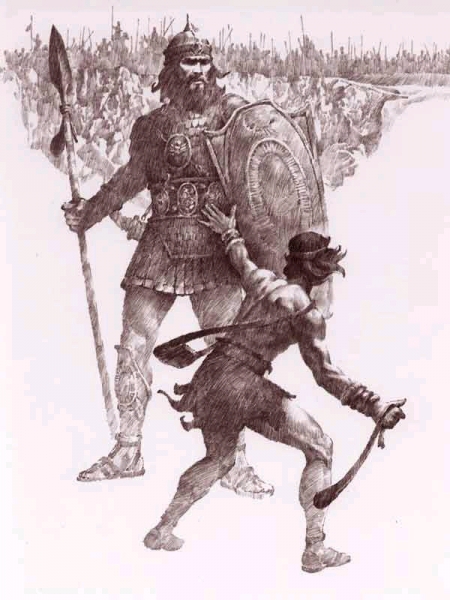
4 Lord God of hosts All creatures are mustered, and trained, and put into garrison, or brought forth into the field, by his command. Which way can we look beside his armies? If upward into heaven, there is a band of soldiers, even a multitude of the heavenly host, praising God, Lu 2:13. If to the lower heavens, there is a band of soldiers, Ge 2:1; it was universa militia caeli, to which those idolaters burnt incense. On the earth, not only men are marshalled to the service; so Israel was called the "host of the living God; "but even the brute creatures are ranged in arrays. So God did levy a band of flies against the Egyptians; and a band of frogs that marched into their bed chambers. He hath troops of locusts, Pr 30:27, and armies of caterpillars. Not only the chariots and horsemen of heaven to defend his prophet; but even the basest, the most indocible, and despicable creatures, wherewith to confound his enemies. If Goliath stalk forth to defy the God of Israel, he shall be confuted with a pebble. If Herod swells up to a god, God will set his vermin on him, and all the king's guard cannot save him from them. You have heard of rats that could not be beaten off till they had destroyed that covetous prelate; and of the fly that killed Pope Adrian. God hath more ways to punish than he hath creatures. "The Lord God of Hosts" is not properly a title of creation, but of Providence. All creatures have their existence from God as their Maker; but so have they also their order from him as their Governor. It refers not so much to their being as to their marshalling; not to their natural but militant estate; not only as creatures do they owe him for their making, but as they are soldiers for their managing. Their order is warlike, and they serve under the colours of the Almighty. So that here, God would be respected, not as a creator, but as a general. His anger, therefore, seems so much the more fearful, as it is presented to us under so great a title: "the Lord God of Hosts" is angry. They talk of Tamerlane that he could daunt his enemies with the very look of his countenance. Oh! then what terror dwells in the countenance of an offended God! The reprobates shall call to the rocks to hide them from the wrath of the Lamb. Re 6:16. If ira agni doth so affright them, how terrible is ira leonis, the wrath of the lion? It may justly trouble us all to hear that the Lord, "the Lord God of Hosts," is angry; in the sense whereof the prophet breaks forth here into this expostulation: "O Lord God of hosts, how long wilt thou be angry with thy people that prayeth?"
Angry against the prayer of thy people There may be infirmities enough in our very prayers to make them unacceptable. As if they be Exanimes, without life and soul; when the heart knows not what the tongue utters. Or Perfunctoriae, for God will have none of those prayers that come out of feigned lips. Or Tentativae, for they that will petere tentando, tempt God in prayer, shall go without. Or Fluctuantes, of a wild and wandering discourse, ranging up and down, which the Apostle calls "beating the air, "as huntsmen beat the bushes, and as Saul sought his father's asses. Such prayers will not stumble upon the kingdom of heaven. Or if they be Preproperae, run over in haste, as some use to chop up their prayers, and think long till they have done. But they that pray in such haste shall be heard at leisure. Or sine fiducia; the faithless man had as good hold his peace as pray; he may babble, but prays not; he prays ineffectually, and receives not. He may lift up his hands, but he does not lift up his heart. Only the prayer of the righteous availeth, and only the believer is righteous. But the formal devotion of a faithless man is not worth the crust of bread which he asks. Or sine humilitate, so the pharisee's prayer was not truly supplicatio, but superlatio. A presumptuous prayer profanes the name of God instead of adoring it. All, or any, of these defects may mar the success of our prayers.
As quoted in Spurgeon'sTreasury of David.

2008-06-17

Adams on Psalm 73:18, 20; 77:10

18, 20 Their banqueting house is very slippery, and the feast itself a mere dream.
10 I will remember the years of the right hand of the Most High Not the moments, nor the hours, nor days of a few short afflictions, that his left hand hath dealt to me: but the years of his right hand; those long, large and boundless mercies wherewith he hath comforted me.
As quoted in Spurgeon's Treasury of David.