
.jpg)


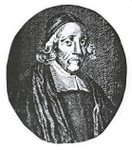


Paxton Hood on Puritan Adams 2
More from Edwin Paxton Hood Lamps, Pitchers, and Trumpets; lectures ... on the vocation of the preacher. Illustrated by anecdotes, ... of every order of pulpit eloquence, from the great Preachers of all ages 1867
 ... But while he performed this task well, it required a loose and rapid manner and tongue to give effect to the delineations. He draws with a bold hand the pictures of the manners of the times. Indeed, it is impossible to read Adams attentively without feeling that the writers whose names we have just mentioned, not only knew, but felt themselves beneath the influence of his portraitures. He is, perhaps, rather a divine moralist than a theologian. He follows no thought out in the spirit of Aquinas and the schools, or even in the spirit and manner of St. Augustine. He is a man of quick impulses, and often seems to be mastered by words and forms. He never ventures into the region of abstract thought; is never tormented by the causes of things. He is a preacher, and as such, he holds up the mirror to his hearers. He is never far from them in heights or in depths. There is often a cheerful, easy garrulity about him. He preached in stirring times, and he knew how easily to turn the popular feelings by hints and references to the political events of the day. He lived and preached in the day of the gunpowder plot; preaching from the text, “Thou hast caused men to ride over our heads,” he exclaimed, “They love fire still: they were then for faggots, they are now for powder. If these be Catholics, there are no cannibals.” The point of many of his allusions lay in the memory, and, therefore, in the ready sympathy of the people.
 ... But while he performed this task well, it required a loose and rapid manner and tongue to give effect to the delineations. He draws with a bold hand the pictures of the manners of the times. Indeed, it is impossible to read Adams attentively without feeling that the writers whose names we have just mentioned, not only knew, but felt themselves beneath the influence of his portraitures. He is, perhaps, rather a divine moralist than a theologian. He follows no thought out in the spirit of Aquinas and the schools, or even in the spirit and manner of St. Augustine. He is a man of quick impulses, and often seems to be mastered by words and forms. He never ventures into the region of abstract thought; is never tormented by the causes of things. He is a preacher, and as such, he holds up the mirror to his hearers. He is never far from them in heights or in depths. There is often a cheerful, easy garrulity about him. He preached in stirring times, and he knew how easily to turn the popular feelings by hints and references to the political events of the day. He lived and preached in the day of the gunpowder plot; preaching from the text, “Thou hast caused men to ride over our heads,” he exclaimed, “They love fire still: they were then for faggots, they are now for powder. If these be Catholics, there are no cannibals.” The point of many of his allusions lay in the memory, and, therefore, in the ready sympathy of the people.
Of illustrative aphoristic words the reader may take the following: -
A beast hath one kind of eye, a natural man two, a Christian three. The beast hath an eye of sense; the natural man of sense and reason; the Christian of sense, of reason, and faith. To want the eyes of angels is far worse than to want .the eyes of beasts.
Riches are called bona fortuna, the goods of fortune; not that they come by chance, but that it is a chance if they ever be good.
Philip was wont to say, that an ass laden with gold would enter the gates of any city; but the golden load of bribes and extortions shall bar a man out of the city of God. All that is to follow is like quicksilver; it will be running.
Not seldom a russet coat shrouds as high a heart as a silken garment. You shall have a paltry cottage send up more black smoke then a goodly manor. It is not, therefore, wealth, but vice, that excludes men out of heaven.
There are some that “kiss their own hands ” (Job xxxi. 12) for every good turn that befals them. God giveth them blessings, and their own wit or strength hath the praise.
It is usual with God, when he hath done beating his children, to throw the rod into the fire. Babylon a long time shall be the Lord’s hammer to bruise the nations, at last itself shall be bruised. Judas did an act that redounds to God’s eternal honour and our blessed salvation, yet was his wages the gallows. All these hammers, axes, rods, saws, swords, instruments, when they have done those offices they never meant, shall, for those they have meant, be thrown to confusion. .
The five senses are the Cinque Ports, where all the great traffic of the devil is taken in.
When the heart is a good secretary, the tongue is a good pen; but when the heart is a hollow bell, the tongue is a loud and lewd clapper. Those undefiled virgins admitted to follow the Lamb have this praise, “ In their mouth was found no guile."
Ask the woman that hath conceived a child in her womb will it be a son? Peradventure so! Will it be well-formed and featured? Peradventure so! Will it be wise? Peradventure so! Will it be rich? Peradventure so! Will it be long-lived? Peradventure so! Will it be mortal? Yes, this is without peradventure, it will die!
The following passage upon the almost casual expression in 2 Peter i. 17 - "Such a voice" - well illustrates how a word caught him, and often carried him away upon a stream of learned and gorgeous fancy and discourse :—
such a voice
Tully commends voices: Socrates’ for sweetness; Lysias’ for subtlety; Hyperides’ for sharpness; Aeschines’ for shrillness; Demosthenes‘ for powerfulness; gravity in Africanus; smoothness in Loelius - rare voicesl, In holy writ, we admire a sanctified boldness in Peter; profoundness in Paul; loftiness in John; vehemency in him and his brother James, those two sons of thunder; fervency in Simon the zealous. Among ecclesiastical writers, we admire weight in Tertullian; a gracious composure of well-mattered words in Lactantius; a flowing speech in Cyprian; a familiar stateliness in Chrysostom; a conscionable delight in Bernard; and all these graces in good Saint Augustine. Some construed the Scriptures allegorically, as Origen; some literally, as Jerome; some morally, as Gregory; others pathetically, as Chrysostom; others dogmatically, as Augustine. The new writers have their several voices: Peter Martyr, copiously judicious; Zanchius, judiciously copious. Luther wrote with a coal on the walls of his chamber: Res et verba Philippus; res, sine verbis Lutherus; verba, sine re Erasmus: nee res nee verba Carlostadius. Melancthon had both style and matter; Luther, matter without style; Erasmus, style without matter; Carlstadt, neither the one nor the other. Calvin was behind none, not the best of them, for a sweet dilucidation of the Scriptures, and urging of solid arguments against the Anti-Cliristians. One is happy in expounding the words; another in delivering the matter; a third for cases of conscience; a fourth to determine the school doubts. But now put all these together: a hundred Peters and Pauls; a thousand Bernards and Augustines; a million of Calvins and Melanchthons. Let not their voices be once named with this voice: they all spake as children. This is the voice of the Ancient of Days. (Commentary 2 Peter)
Thus he rang the changes very effectively on a word, as in
Dust
Dust, the matter of our substance, the house of our souls, the original grains whereof we were made, the top of all our kindred. The glory of the strongest man, the beauty of the fairest woman, all is but dust. Dust, the only compounder of differences, the absolver of all distinctions. Who can say which was the client, which the lawyer; which the borrower, which the lender; which the captive, which the conqueror, when they all lie together in blended dust?
Dust; not marble nor porphyry, gold nor precious stone, was the matter of our bodies, but earth, and the fractions of the earth, dust. Dust, the sport of the wind, the very slave of the besom. This is the pit from whence we are digged, and this is the pit to which we shall be resolved. “Dust thou art, and to dust thou shalt return again," Gen. iii., 19. They that sit in the dust, and feel their own materials about them, may well renounce the ornaments of pride, the gulf of avarice, the foolish lusts of concupiscence. Let the covetous think, What do I scrape for? a little golden dust,- the ambitious, What do I aspirc for? a little honourable dust; the libidinous, What do I languish for? a little animated dust, blown away with the breath of God’s displeasure.
Oh, how goodly this building of man appears when it is clothed with beauty and honour! A face full of majesty, the throne of comeliness, wherein the whiteness of the lily contends with the sanguine Of the rose; an active hand, an erected countenance, an eye sparkling out lustre, a smooth complexion, arising from an excellent temperature and composition ; whereas other creatures, by reason of their cold and gross humours, are grown over, beasts with hair, fowls with feathers, fishes with scales. Oh, what- a workman was this, that could raise such a fabric out of the earth, and lay such orient colours upon dust! Yet all is but dust, walking, talking, breathing dust; all this beauty but the effect of a well concocted food, and life itself but a walk from dust to dust. You, and this man, or that woman, is never so beautiful as when they sit weeping for their sins in the dust: as Mary Magdalene was then fairest when she kneeled in the dust, bathing the feet of Christ with her tears, and wiping them with her hairs; like heaven, fair sightward to us that are without, but more fair to them that are within. The dust is come of the same house that we are, and when she sees us proud and forgetful of ourselves, she thinks with herself, Why should not she that is descended as well as we bear up her plumes as high as ours ? Therefore she so often borrows wings of the wind, to mount aloft into the air, and in the streets and highways dasheth herself into our eyes, as if she would say, Are you my kindred, and will not know me? Will you take no notice of your own mother? To tax the folly of our ambition, the dust in the street takes pleasure to be ambitious.
(Commentary 2 Peter)