.jpg) |
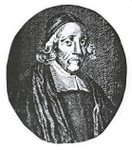
| Bryson Burroughs, Public domain, via Wikimedia Commons |
I. His STRENGTH: A HUNTER. Huntingin itself is a delight lawful and laudable, and may well be argued for from the disposition that God hath put into creatures. He hath naturally inclined one kind of beasts to pursue another for man's profit and pleasure. He hath given the dog a secret instinct to follow the hare, the hart, the fox, the boar, as if he would direct a man by the finger of nature to exercise those qualities which His Divine wisdom created in them.
1. This practice of hunting hath in it delight.
2. Benefit. Recreations have also their profitable use, if rightly undertaken.
(1) The health is preserved by a moderate exercise.
(2) The body is prepared and fitted by these sportive to more serious labours, when the hand of war shall set them to it.
(3) The mind, wearied with graver employments, hath thus some cool respiration given it, and is sent back to the service of God with a revived alacrity.
II. HIS POLICY: A CUNNING HUNTER.
1. He had a ravenous and intemperate desire. This appears from three phrases he used:
(1) "Feed me, I pray thee" (ver 30); satisfy, saturate, satiate me; or, let me swallow at once, as some read it. The words of an appetite insufferable of delay.
(2) To show his eagerness, he doubles the word for haste: "with that red, with that red pottage;" red was his colour, red was his desire. He coveted red pottage; he dwelt in a red soil, called thereon Idumea; and in the text, "therefore was his name called Edom."(3) He says, "I am faint," and (ver. 32) "at the point to die," if I have it not. Like some longing souls that have so weak a hand over their appetites, that they must die if their humour be not fulfilled.
2. His folly may be argued from his base estimation of the birthright; that he would so lightly part from it, and on so easy conditions as pottage.
3. Another argument of his folly was ingratitude to God, who had in mercy vouchsafed him, though but by a few minutes, the privilege of primogeniture; wherewith divines hold that the priesthood was also conveyed.
4. His obstinacy taxeth his folly, that, after cold blood, leisure to think of the treasure he sold, and digestion of his pottage, he repented, not of his rashness, but (ver. 34) "He did eat, and drink, and rose up, and went his way" — filled his belly, rose up to his former customs, and went his way without a Quidfeci? Therefore it is added, "he despised his birthright." He followed his pleasures without any interception of sorrow or interruption of conscience. His whole life was a circle of sinful customs; and not his birthright's loss can put him out of them.
5. Lastly, his perfidious nature appeareth, that though he had made an absolute conveyance of his birthright to Jacob, and sealed the deed with an oath, yet he seemed to make but a jest of it, and purposed in his heart not to perform it. Thus literally; let us now come to some moral application to ourselves. Hunting is, for the most part, taken in the Holy Scripture in the worst sense. So (
Genesis 10:9) Nimrod was a hunter, even to a proverb; and that "before the Lord," as without fear of His majesty. Now, if it were so hateful to hunt beasts, what is it to hunt men? The wicked oppressors of the world are here typed and taxed, who employ both arm and brain to hunt the poor out of their habitations, and to drink the blood of the oppressed Herein observe —
I. The persons hunted.
II. The manner of hunting; and,
III. The hounds.
1. The poor are their prey: any man that either their wit or violence can practise on.
2. You hear the object they hunt; attend the manner. And this you shall find, as Esau's, to consist in two things — force and fraud. They are not only hunters, but cunning hunters.
3. Now for their hounds. Besides that they have long noses themselves, and hands longer than their noses, they have dogs of all sorts. Beagles, cunning intelligencers - the more crafty they are, the more commendable, Their setters, prowling promoters; whereof there may be necessary use, as men may have dogs, but they take them for mischievous purposes. Their spaniels, fawning sycophants, who lick their master's hands, but are brawling ever at poor strangers. Their great mastiffs; surly and sharking bailiffs, that can set a rankling tooth in the poor tenants' ribs. Thus I have shown you a field of hunters; what should I add, but my prayers to heaven, and desires to earth, that these hunters may be hunted? The hunting of harmful beasts is commended: the wolf, the boar, the bear, the fox, the tiger, the otter. But the metaphorical hunting of these is more praiseworthy; the country wolves, or city foxes, deserve most to be hunted.

.jpg)




.jpg)
