2007-09-11

Publications 07

Title: Mystical bedlam, or the vvorld of mad-men. By Tho: Adams 2 Tim 3:9 Their madness shall be manifest, etc. and a quote from Augustine on the Trinity
Imprint: London: Printed by George Purslowe for Clement Knight, and are to be sold at his shoppe in Paules Church-yard at the signe of the Holy Lambe, 1615.
Date: 1615
No. pages: [6], 82 p.
Notes: Sermons; Running title reads: Mysticall bedlam, the world of mad-men.
Copy from: Cambridge University Library
The two sermons are on Ecclesiastes 9:3 and are preceded by a four page dedication 'To the right honourable Sir Thomas Egerton, Knight, Baron of Ellesmere, Lord High Chancellor of England, one of his majesty's right hon privy council, the true pattern of virtue and patron of good learning.' Egerton lived 1540-1617.

2007-09-10

Publications 06


Title: Englands sicknes, comparatively conferred with Israels Diuided into two sermons, by Tho: Adams. Imprint: London: Imprinted by E: G[riffin]: for Iohn Budge, and Ralph Mab, 1615. Date: 1615 No. pages: [4], 101, [1] p. Notes: Quires F and I exist in two different settings, identified by the position of the signature-mark on the first leaf of the gathering. Quire F: signature-mark (1) under "God" or (2) under "please". Quire I: signature-mark (1) under the "d" or (2) under the "m"s of "commendeth". Copy from: Cambridge University Library
The text is Jer 8:22. The work is divided into two lectures preceded by a two page dedication "to the right worshipfull Sir Iohn Cleypoole Knight". This appears to be John Claypole of Northborough, Northamptonshire, married to Mary Angell and the father (1625) of Lord John Claypole who married Cromwell's daughter Elizabeth.

2007-09-08

Publications 05

Title: The blacke devil or the apostate Together with the wolfe worrying the lambes. And the spiritual navigator, bound for the Holy Land. In three sermons. By Thomas Adams.
Jer 13:23 Can the Black-moore change his skin? etc and a quotation from Bernard's sentences.
Imprint: [London]: Printed by William Iaggard, 1615.
Date: 1615 No. pages: [8], 78, [2]; [4], 34, [2]; [4], 58, [2] p. Notes: "Lycanthropy, or the vvolfe vvorrying the lambes" and "The spirituall nauigator bound for the Holy Land" each has separatley dated title page, pagination and register.; Initial leaf contains large signature-mark "A" with ornaments.; The last leaf is blank.
Copy from: British Library
The work is preceded by a two page dedication 'to the honourable gentleman, Sir Charles Morrison, knight Baronet' and a two page epistle to the reader. Morrison lived 1587-1628 and married Mary Hicks (daughter of Baptist Hicks) in 1606.

2007-09-07

Publications 04

Title: The deuills banket described in foure sermons [brace], 1. The banket propounded, begunne, 2. The second seruice, 3. The breaking vp of the feast, 4. The shot or reckoning, [and] The sinners passing-bell, together with Phisicke from heauen / published by Thomas Adams
Imprint: London: Printed by Thomas Snodham for Ralph Mab, and are to be sold in Paules Churchyard, at the signe of the Grayhound, 1614.
Amos 6:7 and 8:10 Therefore, etc
There is also a Latin quotation fom Ambrose on penitence.
Date: 1614
No. pages: [8], 348 p.
Notes: Each sermon, except the first, has special t.p.; Part V has imprint: London: Printed by Thomas Snodham of Iohn Budge, 1614.; Marginal notes.; Includes six sermons published elsewhere; Signatures: A-2V4 2X3.; Signature Bb3 mislabeled Bb5.; Numerous errors in paging.
Copy from: Harvard University Library
The sermons are preceded by a three page dedication 'To the verie worthie and vertuous gentleman Sir George Fitz-Jeoffrey Knight, one of Majesties Justices of the Peace and Quo vam in the Countie of Bedford' and a three page epistle to the reader headed 'Ad vel in Lectorem'.


That same year another edition appeared
Title: The Diuells banket Described in sixe sermons. ... Published by Thomas Adams ...
Imprint: London: Printed by Thomas Snodham for Iohn Budge [or Ralph Mab], and are to be sold in Paules Churchyard, at the signe of the Grayhound, 1614.
Date: 1614
No. pages: [8], 341, [3] p.
Notes: The last leaf is blank.; Sermons [2] "The second seruice of the Deuils banket", [3] "The breaking vp of the Deuils banket. Or the conclusion", [4] "The shot: or the wofull price vvhich the wicked pay for the feast of vanitie", [5] "The sinners passing-bell. Or a complaint from heauen for mans sinnes", and [6] "The sinners passing-bell. Or phisicke from heauen" have separately dated title pages; pagination and register are continuous.; Sermons 5 and 6 may have been issued together separately.; The general title page and those of all the sermons except 5 may have either John Budge or Ralph Mab in the imprint; sermon 5 has only been noted with Budge's name.; Sermon 5 identified as existing elsewhere.
Copy from: Henry E. Huntington Library and Art Gallery (also at Sion College).

2007-09-06

Publications 03

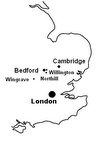
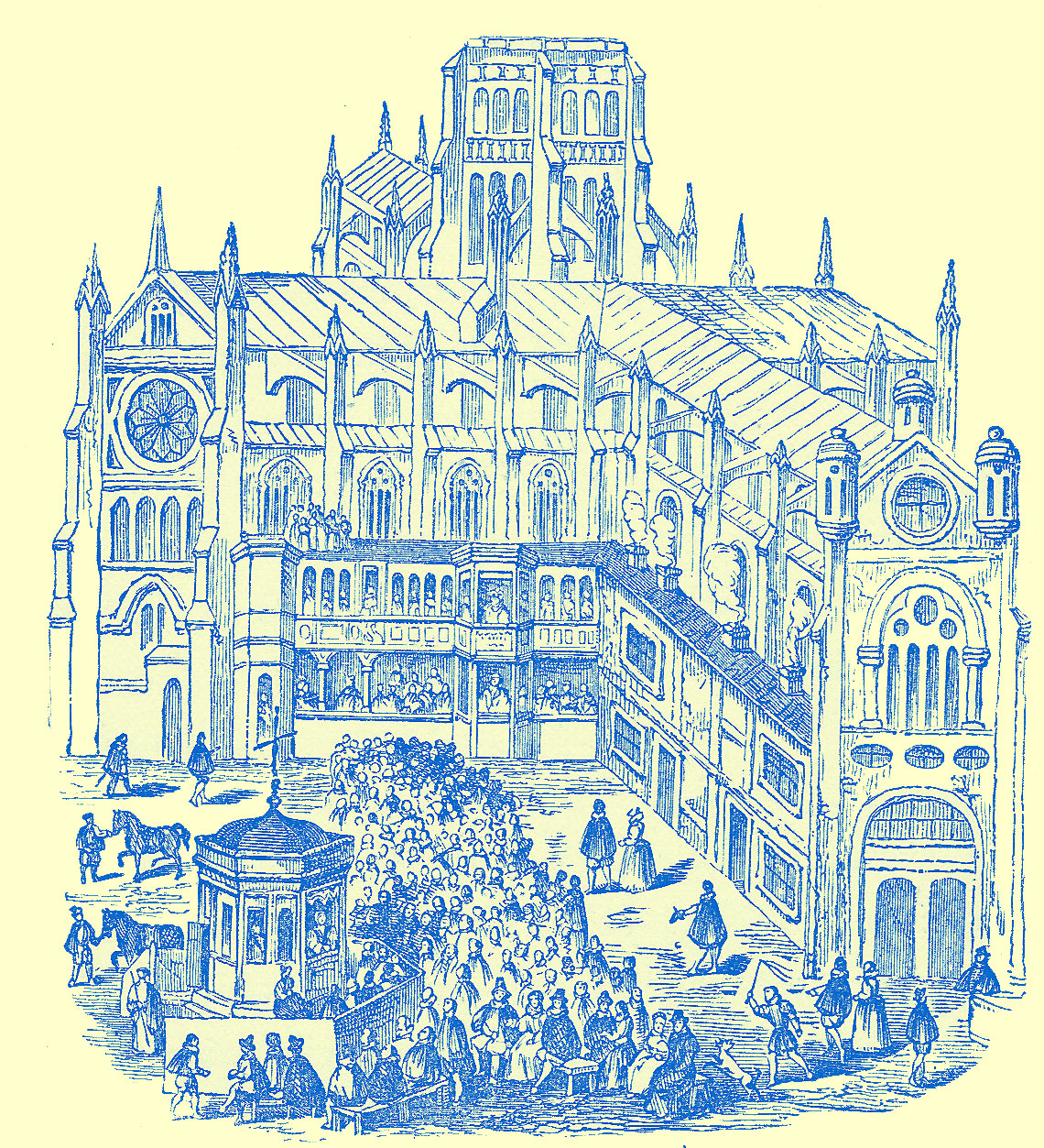
Title: The white deuil, or The hypocrite vncased in a sermon preached at Pauls Crosse, March 7. 1612. By Thomas Adams minister of the gospell at Willington, in Bedfordshire.

John 6:70 Have I not chosen you twelve, etc.
Imprint: London: Printed by Melchisedech Bradvvood for Ralph Mab, and are to be sold in Pauls Church-yard, at the sig ne [sic] of the Angel, 1613.
Also a version printed by Thomas Snodham.
Date: 1613
No. pages: [8], 61, [1] p.
Notes: Running title reads: The white deuill. On second edition some print faded; several pages stained.
Copy from: Emmanuel College (University of Cambridge) Library. Also one at Union Theological Seminary (New York, NY) Library.
The sermon is preceded by a two page dedication to Sir Thomas Cheeke (an MP?) and a three and a half page epistle to the reader. The sermon is on John 12:6.
Easily Adams's most popular work it was presumably reprinted more than once and then an expanded edition appeared in 1615 -
Title: The vvhite deuill or The hypocrite vncased to this fourth impression are newly added, 1 The two sonnes or The dissolute conferred vvith the hyprocrite. 2 The leauen, or A medicine for them both. By Tho. Adams.
Imprint: London : Printed by Thomas Dawson, for VVilliam Arondell, and are to be sold in Pauls Church-yard, at the signe of the Angell, 1615.
Date: 1615
No. pages: [10], 121, [1] p.
Notes: "The tvvo sonnes or the dissolute conferred vvith the hypocrite" has separate dated title page, and "The leauen or a direction to heauen" has a divisional title, but pagination and register are continuous.
Copy from: Henry E. Huntington Library and Art Gallery
This expanded edition also appeared in 1621 [Imprint: London: Printed [by Thomas Snodham] for Richard Higginbotham, and are to be sold in Pauls Church-yard, at the signe of the Angell, 1621. No. pages: [10], 62+ p. Notes: The first leaf is blank.; "The leaven, or a medicine for them both" was published in the fourth impression as "The leaven or a direction to heaven". (Lacking all after p. 62). Copy from: Sion College Library]

2007-09-05

W F Mitchell 01


This extract is from W Fraser Mitchell's English Pulpit Oratory From Andrewes to Tillotson published by SPCK in 1932. See pp 214-216


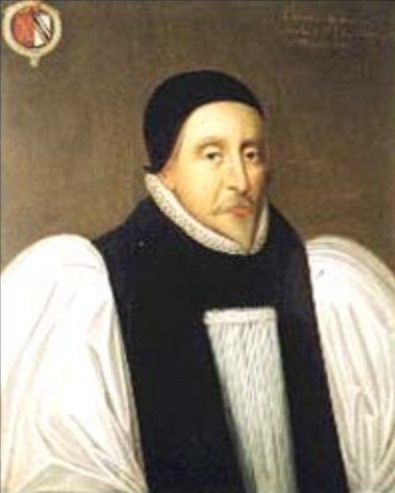
Adams’ sermons are particularly rich in topical allusion and, … he drew upon contemporary deposit of strange and curious learning secured at one and the same time an edifying moral rhetorical effect. One feature of his work, however, calls for special remark - his great familiarity with the Classics and his almost instinctive habit of quoting from them. Not after his first college-addresses as a young don do we find allusion to the Classics in Andrewes (see pic), and even in case of the Puritan archbishop Abbot, whose ‘Exposition upon the Prophet Jonah’’ contains numerous quotations from the Classics, it must be remembered that such quotations occur in university discourses. With Adams, on other hand, preaching at times, it is true, before distinguished patrons but, for the most part, to a City auditory, classic allusions are constant, and classical quotations so numerous that it is difficult to open his works at random without lighting on some reference to the stories of Aesop or the Metamorphoses, or finding a quotation from Juvenal, Horace, Martial, or, most frequently of all, Seneca. This feature of his work links him up closely with Joseph Hall, and together they point forward to what was to be a distinguishing characteristic of Tillotson. Adams’ habit, however, translating his quotations, when they are in verse, in doggerel couplets - a device familiar to readers of Florio’s Montaigne and other translations of the period - was unique and is proof of the early date of his work.
Another feature of Adams’ sermons, in this case connect with their publication, which is of more than passing interest, is the strange and arresting titles under which they appeared. Burton’s well-known gibe about men rushing to print with sermons to which they gave titles likely to attract public attention, although principally directed against those who sought to impress by pointing to distinguished auditories before whom they had preached, might equally well have been directed against those who endeavoured to give to their printed discourses the advantages enjoyed at the present day by the novel but then confined to the pamphlet and the play; and, in an age of alluring sermon titles Adams’, it may certainly be claimed, secured a high place. Two of his titles, moreover, The Sovles Sicknesse and Mysticall Bedlam, serve not only as striking advertisements for printed sermons, but also usher in collections of characters written round a leading idea. We are not surprised, therefore, for this and other reasons, to learn from one of Adams’ prefaces, that by contemporaries he was considered a trifle fanciful, and given to allegories and rhetorical flourishes; but in point of fact such sermons are merely specimens of the "figure sermons" beloved of Spanish preachers, some of whom, according to Claude, even laid down rules for preaching in this manner. Robinson, Claude’s editor, in a note, further informs, us that so great a preacher as Cardinal Borromeo, in his Oration to the clergy of Milan, delivered at the opening of his sixth Provincial Council, indulged in a composition of this kind, in which various sins are depicted in turn by their resemblance to physical diseases, very much in the manner of Adams’ earlier discourse. From Robinson’s note we further learn that this fashion of strange titles and series of religious contemplations paralleled by descriptions drawn from some variegated sphere in life flourished considerably in England in the 40 years which ended about 1590. Adams' productions, therefore, represent a survival rather than an innovation.
Note Some of his more outstanding titles may be mentioned in passing. His first recorded sermon was The Gallants Burden, followed soon after by The Devills Banket, a series of six sermons, each with a separate title: 1. The Banket Propounded, Begun 2. The Second Service 3.The Breaking up of the Feast 4. The Shot 5. The Sinners Passing-Bell 6. Physicke from Heauen. Others are Politicke Hunting, The Three Divine Sisters, The White Devil (Or the Hypocrite Vncased: In a Sermon Preached at Paules Crosse, March ... 1612, the same year as the publication of Webster’s play; probably this represents a topical hit), The Cosmopolite and The Spirituall Navigator.
Henry Grey

Henry Grey (c 1583-1639) was the 8th Earl of Kent from 1623. From 1621 to 1623, he held the title jointly with his father Charles Grey, 7th Earl of Kent. In 1623 he also became the 11th Lord Grey of Ruthin [established 1325]. He was the only son of Charles and of Susan Cotton. He was married to Elizabeth Talbot in 1601. There were apparently no children. He served as Lord Lieutenant of Bedfordshire, 1621-1627 (jointly with Thomas Wentworth from 1625) and 1629-1639 (again with Wentworth). Grey died childless and his primary title as Earl of Kent was inherited by his closest male-line relative, a second cousin of his father called Anthony (both were great-grandsons of George Grey, the 2nd Earl).